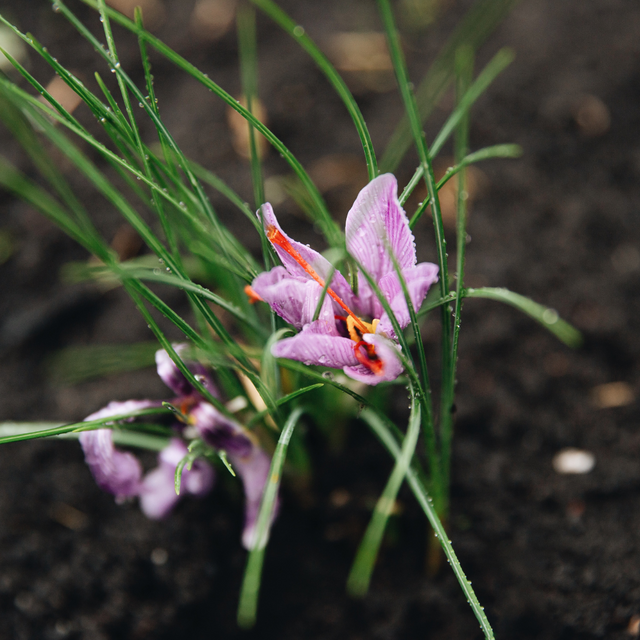


Saffron crocus for growing saffron - size 10+!!
Our saffron crocuses are organically grown, but do not have an official organic label. The grower uses biodynamic cultivation methods, agroforestry, and permaculture, without using any synthetic agents. The grower considers the well-being of soil life to be very important.
These are bulbs of the thickest grade, 10+. This means you get the thickest bulbs available. As a result, you can expect a significant harvest in the first year already.
Saffron changes in flavor every year and this is due to, as they say, 'the terroir'. Simply put: the same white grape produces a different white wine in the Vosges than in the Pyrenees. The bulbs will therefore adapt to the soil life and likely also to the existing bacterial dominance.
About saffron
Saffron is a well-known and widely used spice in the kitchen, ideal for dishes such as rice pudding and risotto. It is also called 'red gold' because of its high price: you pay about 30,000 euros per kilo! This is because saffron is nothing more than the style and stigma of the saffron crocus (Crocus sativus).
Our bulbs are type 10+, which means they are extra large and provide a yield in the very first year. Smaller bulbs on the market do not start flowering until the second or third year.
Growing guide
The saffron crocus is an autumn bloomer and grows best in poor, well-draining soil. Plant the bulbs 15 cm apart and 15 cm deep, between mid-August and mid-September, in a sunny spot. The crocus will then bloom around mid-October, the ideal time to harvest the flowers. Please note! Harvest the flower in its entirety, not just the saffron. Cut the flower as close to the ground as possible to stimulate the bulb to bloom again in the same season. Saffron consists of the female flower parts (the stigmas) of the crocus (orange-colored). Dry these stigmas in the oven at 40-50 °C until they are slightly crisp. You can also dry them on a radiator, although this takes a little longer.
After flowering, only leaves remain. It is important not to cut off this foliage, as it allows the plant to continue photosynthesis, which is crucial for the following year. Around May, the plant begins to visibly die back; from that moment on, you can cut back the foliage. However, it is better to let them die back completely and not prune them. The bulbs do not need to be removed from the ground; they will begin to grow again at the end of August and bloom again in October.
The saffron crocus multiplies vegetatively: one bulb becomes several bulbs every year. The crocus burrows itself deeper into the ground each year. After four years, you should dig up the bulbs and replant them (15 cm deep; 15 cm apart). Ensure that the plot remains weed-free!
Dispatch
Dispatch
We ship your order within 1-2 business days*. For orders over €75, you'll receive one free shipment. Shipping is available from €3.95. All orders are shipped as a parcel with a track and trace code, so you can track your order at any time. Read more about shipping costs in our FAQ.
Delivery time pre-order
Your order will be shipped from the specified delivery date. This also applies if you combine a pre-order with in-stock products. If you want to receive the in-stock products immediately, select "Multiple deliveries" as the shipping method.

Saffron crocus (Crocus sativus) - (select quantity) - 5 pieces is backordered and will ship as soon as it is back in stock.