

Seed potato package - Onions, shallots and garlic
Regular price €23,75Unit priceUnavailablePlant onion 'Red Baron' BIO - 250 grams
Regular price €4,42Unit priceUnavailable-
Onion 'Sturon' Organic (round) - 250 grams
Regular price €3,42Unit priceUnavailable-
Onion 'Setton' Organic (oval) - 250 grams
Regular price €3,42Unit priceUnavailable-
Plant onion 'Stuttgarter' BIO (flat) - 250 grams
Regular price €3,42Unit priceUnavailable-
- Our favoriteSold out
Plant onion 'Shakespeare' BIO - 250 grams
Regular price €2,83Unit priceUnavailable -
- Available from September 2026Sold out
Plant onion 'Radar' BIO - 250 grams
Regular price €2,83Unit priceUnavailable -
- Available from September 2026Sold out
Egyptian onion BIO - Allium cepa viviparum - 1 piece
Regular price €2,42Unit priceUnavailable -
Egyptian onion BIO - Allium cepa viviparum - 1 piece
Regular price €7,88Unit priceUnavailable-


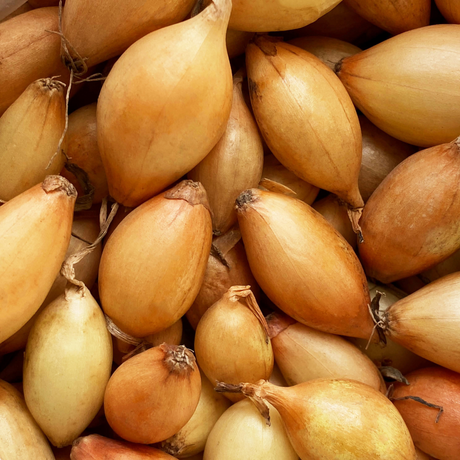
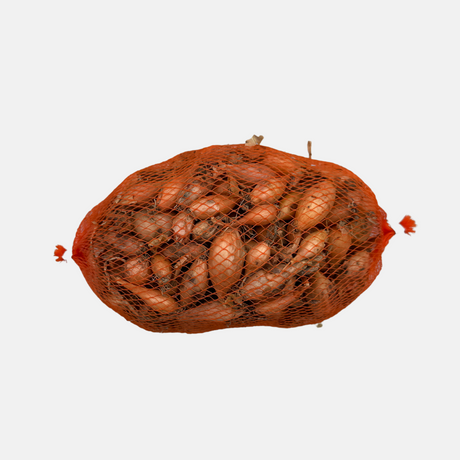
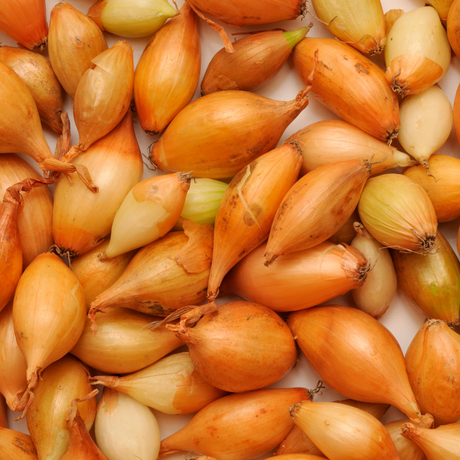
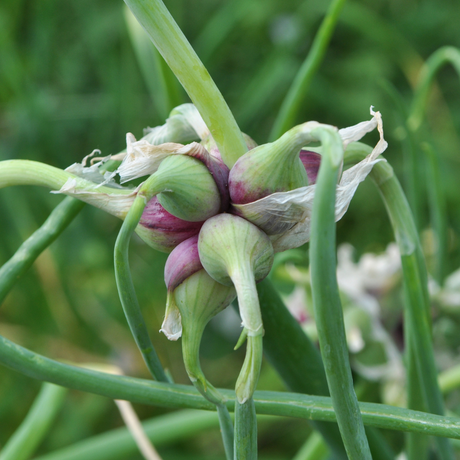
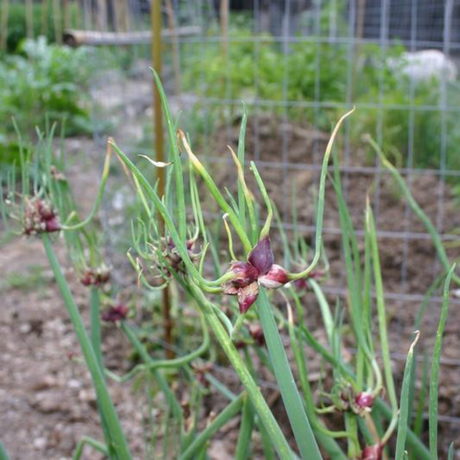
Onions in picture
In this video, Ruud shows you how to grow onions yourself.

Read our growing guide on how to grow onions.
You may also like
View all-
 Our favorite
Seed potato package - Onions, shallots and garlic
Regular price €14,83Unit priceUnavailable -
 Regular priceFrom €2,93Unit priceUnavailable
 -
 Available for reservation from December 2025Regular priceFrom €2,93Unit priceUnavailable
 -
 Regular priceFrom €2,93Unit priceUnavailable
 -
 Regular priceFrom €2,93Unit priceUnavailable
 -
 Regular priceFrom €2,93Unit priceUnavailable
 -
 Regular priceFrom €2,93Unit priceUnavailable
 -
 Regular priceFrom €2,93Unit priceUnavailable

Buy organic onions: For those who like to plan ahead
Onion sets give you a head start in the vegetable garden. You plant them, and before you know it, something crunchy, spicy, and useful will grow. At Plukkers, you choose organically grown onion sets – these onions are grown by certified organic growers, with careful attention to soil, location, and sustainable cultivation methods. They are chemical-free, strong, and suitable for both winter and summer cultivation. Organic onion sets are grown without artificial additives or pesticides and are rich in vitamins, minerals, and antioxidants. Moreover, organic onions are better for people with allergies because they are grown without chemical additives. Growing organic onions respects nature and has a positive impact on the environment. Organic onions are a sustainable choice for the kitchen. In addition to onions, our range also includes other products such as shallots and garlic.
Why choose onions?
Onions are onion varieties that are planted as seed potatoes, in the form of small bulbs, instead of being sown. These seed potatoes offer significant advantages for cultivation: fewer weeds, less patience required, and a greater chance of a successful harvest thanks to efficient cultivation with onion sets. The number of plants per kilogram for onion sets is approximately 260-280, which is useful to know when planning your vegetable garden. The planting distance for onion sets within the row is approximately 10 cm and between rows approximately 15 cm. The planting season for onion sets is from March to May, with a spacing of 25 cm between them and 10 cm within the row.
Benefits of organic onions:
- Faster results than from seed
- Less susceptible to diseases
- Suitable for spring and winter cultivation
- Ideal for those who want to grow efficiently
- Full flavour and firm structure
- Good shelf life, so it can be stored for a long time
Winter onions – strong through the winter for an early harvest
Plant winter onions in the fall and harvest them in early spring. Winter onions can be planted until mid-November. Store winter onions in a dry, airy place upon receipt to maintain their quality until planting time. Onion sets, garlic, and shallots should be unpacked immediately upon receipt and stored in a cool, airy place until planting time. If stored dry and well-ventilated, winter onions will keep for a long time. These onions are frost-resistant and produce fast results.
Plantui 'Shakespeare' BIO
A very winter-hardy and vigorous variety with a good yield. This variety is known for its round onions: it produces attractive, round, yellow onions with a strong skin – ideal for storage and suitable for winter cultivation. Winter onions are generally stronger and more cold-resistant than summer onions. Winter onions are planted in the fall, usually between September and October. Some varieties, such as Japanese onions, have been specifically developed for fall planting to survive the winter. Winter onions continue to grow as soon as temperatures rise, resulting in an early harvest in June or July.
Onion 'Radar'
- Faster results than from seed
- Less susceptible to diseases
- Suitable for spring and winter cultivation
- Ideal for those who want to grow efficiently
- Full flavour and firm structure
- Good shelf life, so it can be stored for a long time
- Note: Onions set can bolt faster than onions grown from seed once they produce a flower. Onions are cold-resistant, but if the ground is frozen, avoid touching them to prevent damage.
Summer onions – classic and versatile
Plant them in spring for a summer harvest. The growing season for summer onions usually lasts between 16 and 20 weeks, or approximately 110 to 140 days. Red onions can be planted outdoors as early as late February. Summer onions grow quickly in the right conditions. Summer onion sets are planted in early spring, usually between February and March. These varieties are slightly more sensitive but produce top-quality onions.
Onion 'Sturon' BIO
A classic onion. Sturon is harvested when fully mature, meaning it's fully developed, colored, and dry. It's reliable, stores well, and is suitable for almost any soil type. After harvest, Sturon can be stored for a long time, provided it's kept dry and cool. Centurion is a robust onion set that stores well, with golden-brown skin and white flesh.
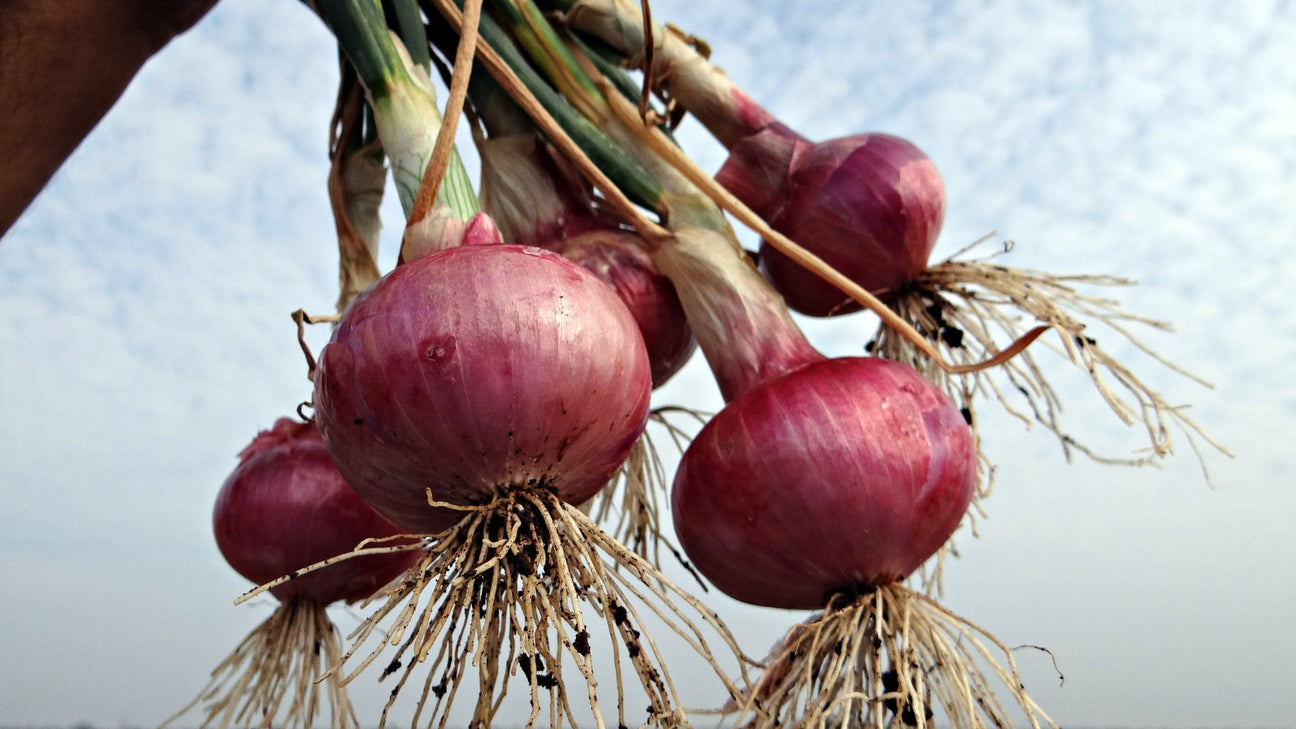
Red onion onions red baron 'Red Baron'
Red Baron is one of the most popular red onions. This deep red summer onion has a sharp yet slightly sweet flavor. It's a much-improved red onion that's perfect for salads, on bread, or pickled.
Onion 'Setton' BIO
A strong and resilient variety with attractive bulb formation. Setton is supplied as seedlings, making it easy to plant. This variety is known for its high yield and long storage life – ideal for home growers.
Spring onions and shallots – more than just onions
You probably know the feeling: you're completely in the flow of your vegetable garden, and then suddenly you think, "Why am I only planting regular onions?" Besides organic onions, you can also enjoy a variety of spring onions and shallots. These little powerhouses bring a whole range of flavors to your kitchen—and believe me, your taste buds will appreciate it! You can plant spring onions early in the season, from late February onwards if the weather cooperates. They're actually young onions that you pick before they've fully grown. They have such a wonderfully mild, slightly sweet flavor and are deliciously crunchy—perfect for sprinkling on your salad or stirring into your soup. Biztro is a new shallot variety that produces very uniform, round, and with a strong, reddish-brown skin.
Shallots are real flavor enhancers in the kitchen. They have a kick, a character, and give any stew or sauce that little something extra you're looking for. And the best part: they grow like crazy! Red onions like the Red Baron are also recommended – they add color not only to your plate but also to your vegetable garden. A beautiful round onion with a mild, sweet flavor just makes gardening even more enjoyable.
For a successful crop, you naturally start with good, organic planting material – it'll save you a lot of hassle later. Pay attention to planting distance and depth, because your spring onions and shallots need plenty of room to grow well. A spot with some air and well-draining soil prevents wet feet and nasty mold. Shallots require a light fertilization, preferably with well-rotted manure before winter. In professional cultivation, we sometimes use hot water treatment to prevent diseases, and drying after harvest is also important – simply place them in a dry, airy spot so they stay fresh for a long time.
You can start harvesting when the foliage begins to change color, usually sometime in June. Keep an eye on it and pick in time for the best yield and the best flavor. Whether you prefer the fresh mildness of spring onions or the spicy power of shallots, both are a true enrichment for your garden and your kitchen. Give it a try – you'll see how easy and fun it is to grow these little flavor bombs yourself!
Planting instructions
- Winter onion planting time: September–October
- Summer onion planting time: March–April
- Planting distance: 10 cm between bulbs, 25 cm between rows
- Planting depth: Plant onions, shallots, and garlic 2.5–4 cm deep for optimal growth.
- Planting: Plant onions, shallots, garlic cloves, and possibly leeks in a sunny, airy spot. Make sure the garlic cloves are planted with the point facing up.
- Location: Sunny, airy soil. Sandy soil is ideal for its good drainage and healthy root development.
- Note: Avoid wet feet when planting to prevent rot.
- Temperatures: The growth of onions, shallots, and garlic depends heavily on the right temperatures; don't plant too early or too late.
- Water: only water during dry periods, but ensure the soil does not remain too moist.
- Storage: Store shallots and onions moist, but not wet. Avoid moisture during storage to prevent mold. Ideally, use crates for good ventilation.
- Drying: After harvesting, allow onions to dry thoroughly in a ventilated area to prevent mold formation.
- Mold: Prevent mold by giving the planting material a warm water treatment before planting.
- Baking: Onions can also be baked after harvest for extra flavor.
- Harvesting: Harvest onions when the foliage begins to change color; this is the right time.
- Foliage: Carefully remove foliage after harvest to prevent diseases.
- Bolting: prevent bolting by choosing the right variety and planting time.
- Flower stem: prevent flower stem formation by not planting too early and choosing suitable varieties.
- Tip: Leeks can be planted in a similar way to onions and shallots.
- Note: the planting time for onions is from March to May with a distance of 25 cm between plants and 10 cm within the row.
Thinking ahead starts with a bullet
Whether you want to harvest early in the spring or make the most of your summer, onion sets now lay the foundation for a robust, flavorful harvest. Set onions are suitable for all kinds of dishes, such as salads, soups, and stews. An onion in a salad instantly adds extra flavor and variety. Depending on the variety, set onions have a juicy, mild, or spicy flavor. Some varieties have a sweet taste, while others offer a spicier or stronger flavor. Set onions are also delicious in sauces and dressings, and fried onions are a real flavor enhancer in many dishes. And organic? It simply tastes better.