Mulching in the vegetable garden
I (Katty Vanhee) promised many of you I would write an article about mulching, so here it is. You hear more and more gardening friends talking about 'mulching'. Mulch... what?! Mulching is a gardening technique often related to permaculture. In permaculture, gardeners create a living environment that is ecologically sustainable and stable for both humans and animals. More about permaculture in a later article. Until recently, mulching was often frowned upon by traditional gardeners, but it's gaining popularity due to its many benefits. In this article, you'll learn more about this technique with its strange name. For those of you already picturing millions of snails, read on... and above all, give it a try.
[caption id="attachment_20065" align="alignnone" width="510"]

Mulch in the vegetable garden[/caption]
Mulching, in short, is covering the soil with organic material. Straw is often used. But for those who don't have straw or have difficulty bringing it into their vegetable garden, there's good news. You can also mulch with other materials such as grass clippings, coconut husks, hay, herbs (nettles or
comfrey ), green waste, young pruning waste, and more. The thickness of the layer depends on the material you're mulching with, and you can read more about that in this article.
Why mulch in the vegetable garden?
The major advantage of mulching is that water evaporates little to none from your vegetable garden soil, keeping your soil moister and
reducing the need to carry water in the summer. Even those dreaded
weed seeds in your vegetable garden don't have the strength to grow through your mulch layer. So you'll have to bend your knees and back much less to weed.
[caption id="attachment_20067" align="alignnone" width="480"]
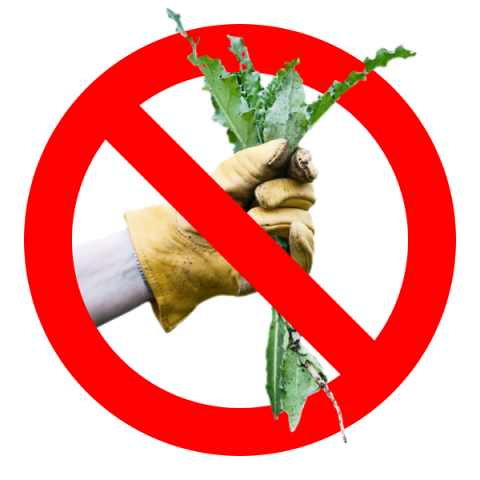
No weeds with mulching[/caption]
Besides these two advantages, there's another benefit that stands out for me. Where the mulch layer touches the soil, soil animals come to feast on this self-decomposing layer. Thousands of soil organisms per square meter process the
mulch into bite-sized pieces for your plants. An earthworm feeds on the layer of grass clippings, and humus forms at the back of its body. Bite-sized gold for your vegetable garden plants. Humus also makes your soil structure spongy and crumbly and prevents soil erosion. In other words, you get top-notch vegetable garden soil.
[caption id="attachment_20069" align="alignnone" width="640"]
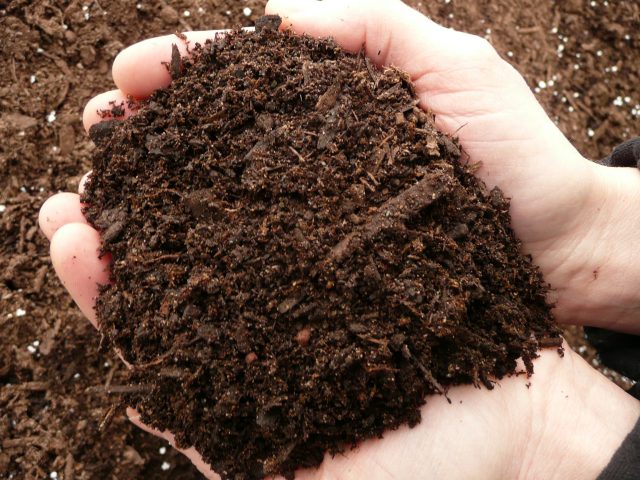
Mulching for good soil[/caption]
When to mulch in the vegetable garden?
"Always," you might say. It's less advisable during periods when your soil needs to warm up, like early spring. I don't take that into account. My crops are two weeks later than those of people who don't mulch, but thanks to the good soil conditions, I can catch up later.
It's very important to apply your
mulch to moist soil. Rain needs time to soak through the
mulch , and your vegetable garden could suffer from thirst.
[caption id="attachment_20074" align="alignnone" width="640"]
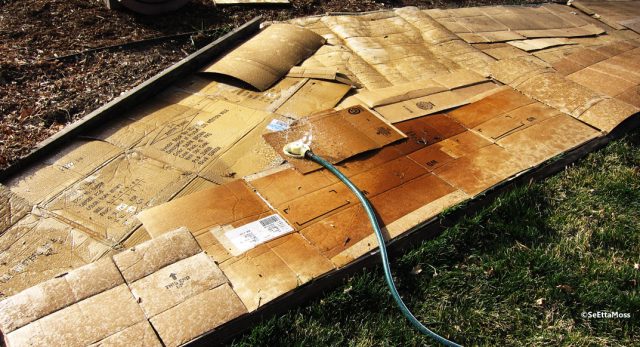
Cardboard in the vegetable garden[/caption]
If you're about to start a new vegetable garden or a new bed, the easiest way is to
lay out large pieces of cardboard and moisten them thoroughly. The cardboard will smother the weeds, and the worms will feast on converting all the organic matter in your sown weeds into humus. And humus... that's the brown gold of the vegetable garden.
With some mulching?
1. Straw
You can find straw at farms or some garden centers. Depending on your region, it may be easier or cheaper to buy straw. For a vegetable gardener with a small garden, say less than 100m², you can buy a few small pressed bales that easily fit in the trunk of your car. They cost about €2 each, and for €10 you can get a lot done. The bales are pressed, so when you break them down, they create a lot of volume. A 15cm layer of straw is sufficient. This layer takes a year to decompose. Also, preferably look for organic straw.
[caption id="attachment_17304" align="alignnone" width="640"]

Straw retains moisture in your vegetable garden soil[/caption]
2. Hay
Just like straw, you can find hay in bulk at your local farmer's in large or small quantities. The price is a bit higher (around 3 euros for a small bale). Many farmers receive subsidies to sow flower meadows. They can't use the hay for their animals because it can contain poisonous
seeds . So they're only too happy if you relieve them of it. This year I got about 20 bales for free. Hay is softer than straw, and fresh leeks
decompose more easily. Hay also decomposes faster than straw. So if you only start mulching in the spring, use hay (or grass clippings) rather than straw. If there are still
seeds in the hay, that's not a problem as long as you cover the ground permanently. 15 cm of hay
mulch disappears in less than 6 months.
[caption id="attachment_20078" align="alignnone" width="640"]

rcw
mulch [/caption]
3. Rcw
You can also use RCW. This is the abbreviation for 'Ramial Chipped Wood'. These are branches from young trees or shrubs that are run through a breaker. This is by far the most nutritious
mulch for vegetable garden soil. Depending on your region, it's easy to find. Many garden associations contact a professional pruner who is more than happy to dispose of their chopped young prunings. They often have to pay to dispose of them. An occasional trailer of RCW is very valuable in the garden. You don't need to apply RCW very thickly. 5 cm is sufficient; otherwise, you risk the layer clumping together and not allowing enough airflow for your plants and their root system. Ideally, RCW is made from hardwood; coniferous wood is also suitable, but more suitable for acid-loving shrubs like blackberries. Note that chipped wood is not the same as RCW. Chipped wood also contains older wood that is more suitable for creating paths. RCW is for young branches and shrubs and excellent for a mulch layer.
4. Grass clippings
Grass clippings make excellent
mulch, but they should be applied in a thin layer of a few centimeters when they're fresh. In large quantities, they heat up and can roast your plants. You can let your grass dry before using it as
mulch , then you can apply a slightly thicker layer. If you don't have much grass yourself, contact your neighbors and friends. They'll be thrilled to get rid of their grass for free. It saves them a garbage bag and a trip to the recycling center. Plus, you'll have a chat too—everyone wins.
[caption id="attachment_20076" align="alignnone" width="600"]
 Mulch
Mulch grass clippings on your
potatoes
5. Dead leaves
If you have trees in your garden, collect the leaves in the fall and place them on your vegetable beds. If you have large leaves like those from maple, plane, or chestnut (which decompose very slowly), run over them with your lawnmower. They'll be ready for the worms in your garden and are also less likely to blow away in the fall. So you kill two birds with one stone. You get rid of those scattered leaves and can mow your lawn again. The combination creates a mulch layer that will provide your vegetable garden with sufficient carbon and nitrogen. These are nutrients that your vegetable garden plants desperately need in the spring. No trees in your garden? Same old story. Take a walk around your neighborhood and chat with owners of gardens with trees. They'll welcome you with open arms if they know you'll take their leaves.

Preparing the vegetable garden starts in winter with a leaf mulch
6. Kitchen waste
Nothing goes to waste in the garden. Don't hesitate to throw any peel, whatever it is, onto your vegetable beds. I even use grapefruit peels, chopped into small pieces. If you don't like the look, hide them under the mulch. They'll entertain the snails that are present in every vegetable garden, and that way they'll leave your vegetables alone.
7. Cardboard
Cardboard is very easy to find. Visit your local bike shop, greengrocer, or electronics store. Try to find unbleached, unprinted cardboard. Earthworms love cardboard, but because you can never be sure where the cardboard comes from or how it's been treated, I try to avoid it. I only use it to weed a new bed. It's better to secure the cardboard with tiles or stones; this will prevent it from blowing away. If you expect a dry autumn or winter, it's also best to water the cardboard thoroughly when applying it. This allows the worms to begin decomposing the weeds and the cardboard immediately. You can also cover the cardboard with a layer of grass clippings to make a delicious lasagna for your worms. Without grass clippings, cardboard is also ideal for root vegetable beds where you sow directly. You can remove the cardboard, turn it over, and sow immediately. With other
mulching methods where there is a thick layer, you may lose time moving the
mulch aside when sowing directly.
[caption id="attachment_19782" align="alignnone" width="150"]
Green manure vetch[/caption]
[caption id="attachment_19776" align="alignnone" width="150"]
Green manure phacelia tanacetifolia[/caption]
[caption id="attachment_19771" align="alignnone" width="150"]
Green manure Lupine Blue[/caption]
[caption id="attachment_19764" align="alignnone" width="150"]
Green manure yellow mustard [/caption]
[caption id="attachment_19787" align="alignnone" width="150"]
Green manure red clover[/caption]
8. Green manure
This is one of my favorite methods. More and more gardeners are sowing
green manures in early fall or early spring.
Green manures help improve soil structure and also add nutrients for future crops. If you mow the
green manures before they flower, you'll have tons of organic material to mulch. Never work
the mulch in, always lay it on top. Not working it in also means less work :) I sow different types of green manures and use them later for
mulch .
And what about the snails???
[caption id="attachment_17306" align="alignnone" width="640"]

My sharks in the vegetable garden enjoy
mulch (kitchen waste)[/caption]
The biggest argument against mulching, you'll read it everywhere in every vegetable gardening group on Facebook
Ebook : "Mulching encourages the reproduction of 'those slimy creatures that eat all our vegetables' (snails). But you should know one thing. Snails are like sharks in the sea. They feed primarily on vegetation that has begun to decompose. After ingesting and digesting this partially decomposed vegetation, they defecate and feed your vegetable garden. Know that their presence will immediately attract predators. Birds love hopping around in your
mulch , searching for numerous shellfish and mollusks. Your vegetables will be left undisturbed. In autumn, toads, great fans of snails, will shelter under the
mulch from the frost. If you're lucky enough to have hedgehogs in your vegetable garden, don't forget to throw some branches and leaves in a corner. The hedgehog family in your garden will naturally regulate your snail population.
Now, I promise to write another article about regulating snails next time. Don't hesitate to check out all the information, recipes, online store, and practical crop sheets on this site.
Katty Vanhee