
- Regular price 3,07Unit priceUnavailable
-
- Regular price 3,07Unit priceUnavailable
-
Marigolds 'Bonita' - double flowered mixed
Regular price 1,63Unit priceUnavailable-
- Regular price 2,14Unit priceUnavailable
-
African marigolds 'Petite Harmony'
Regular price 2,14Unit priceUnavailable-
Marigolds 'Naughty Marietta' - low
Regular price 1,63Unit priceUnavailable-
Marigolds 'Nana Petite Orange'
Regular price 2,14Unit priceUnavailable-
- Regular price 3,07Unit priceUnavailable
-
- Regular price 2,14Unit priceUnavailable
-
- Regular price 1,63Unit priceUnavailable
-
- Regular price 1,63Unit priceUnavailable
-
 Sold out
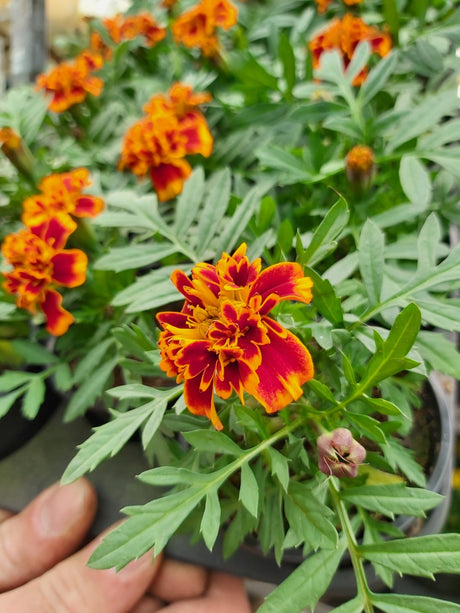
Tagetes African marigolds Red-Orange flamed in pot 7 cm 1 plant
Regular price 1,24Unit priceUnavailable- Sold outRegular price 1,63Unit priceUnavailable
-
- Regular price 2,48Unit priceUnavailable
-
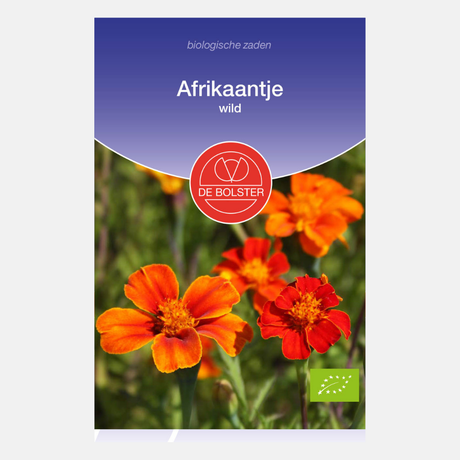

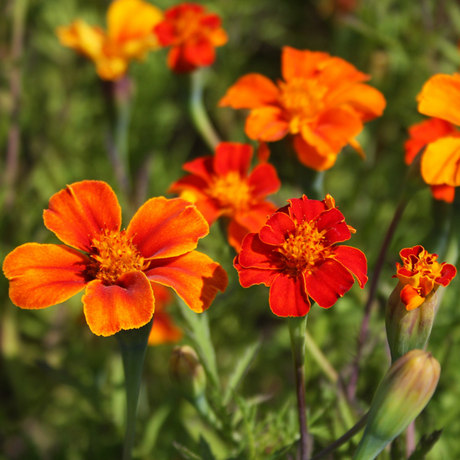
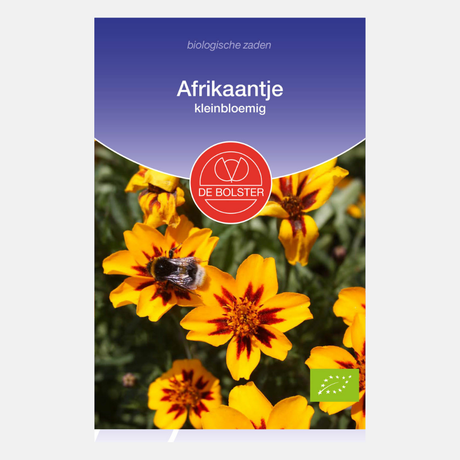

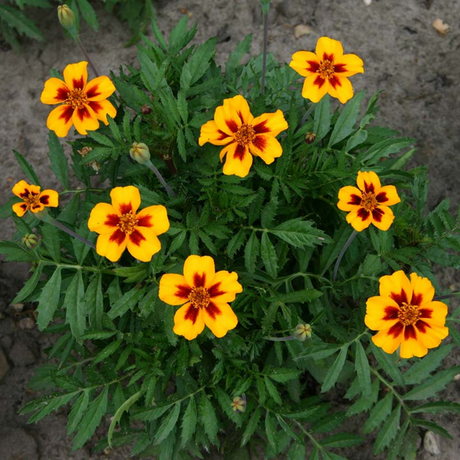
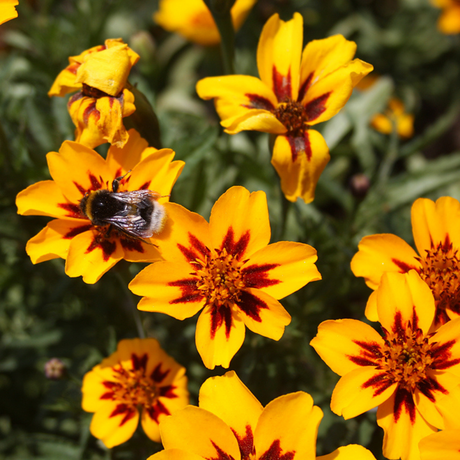
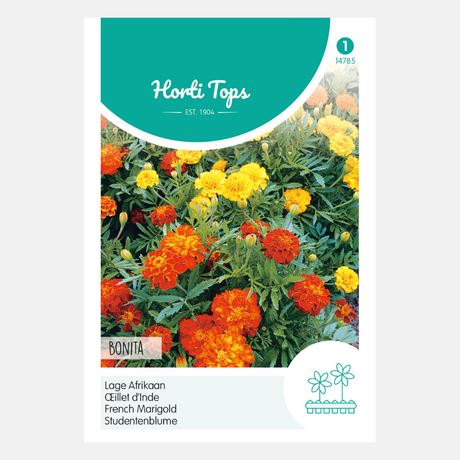
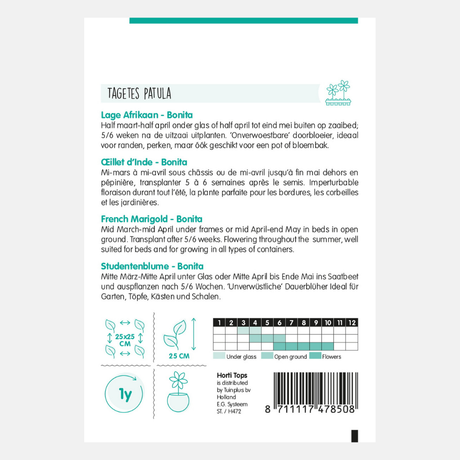
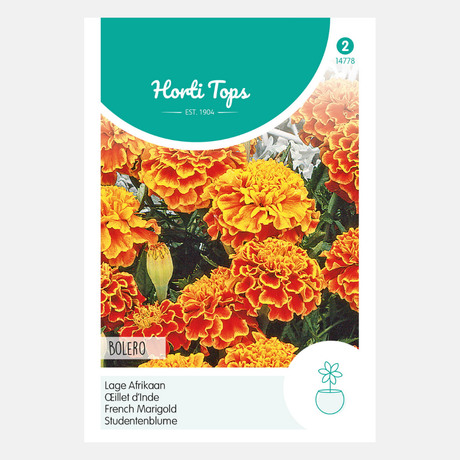
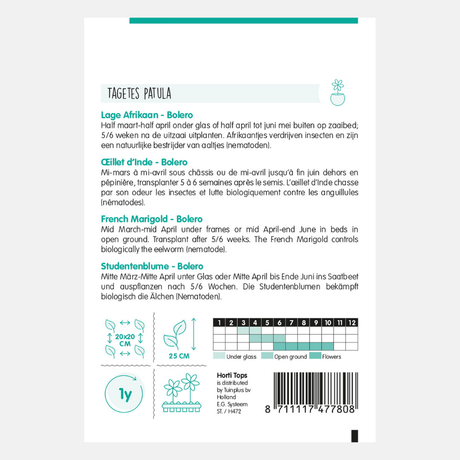
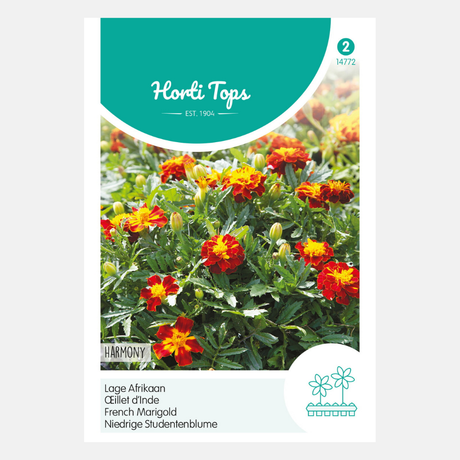
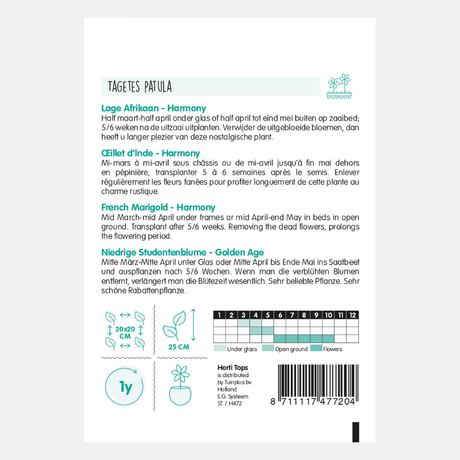
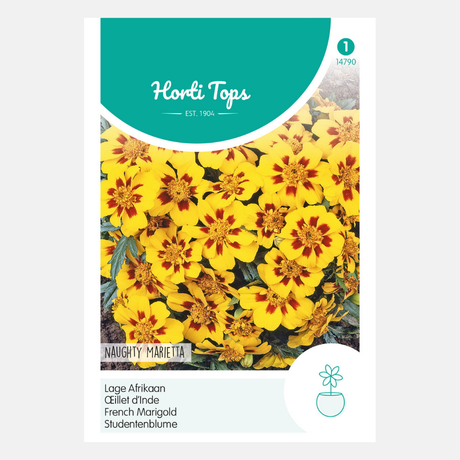
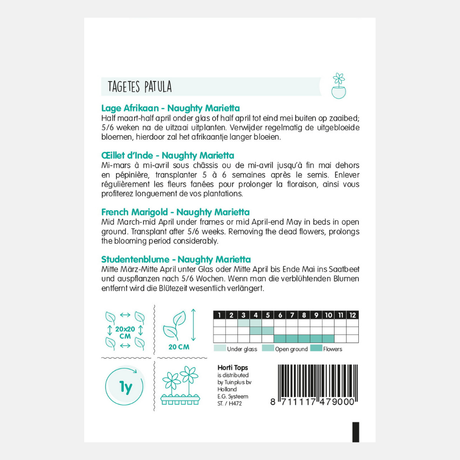
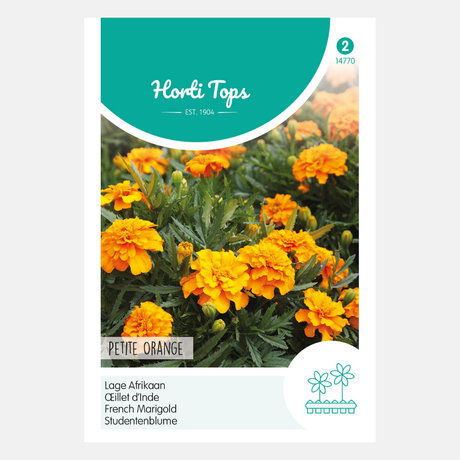
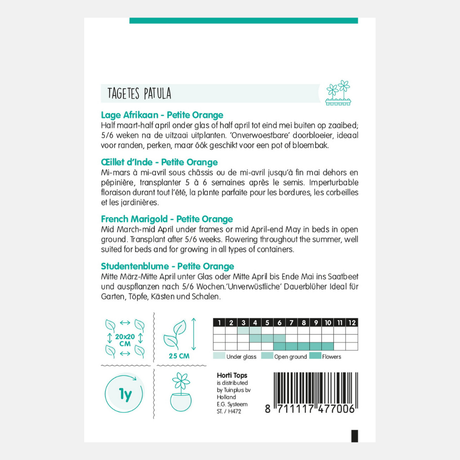
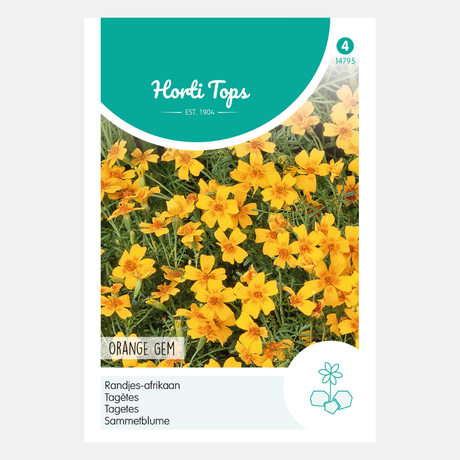
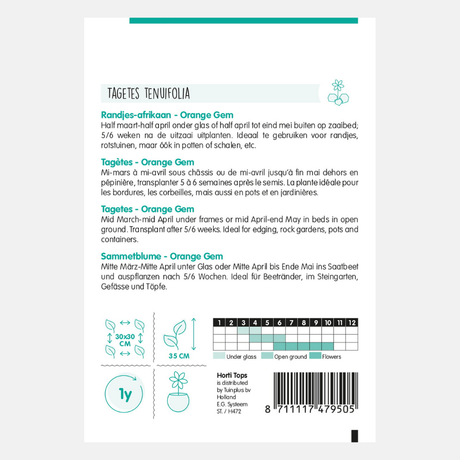
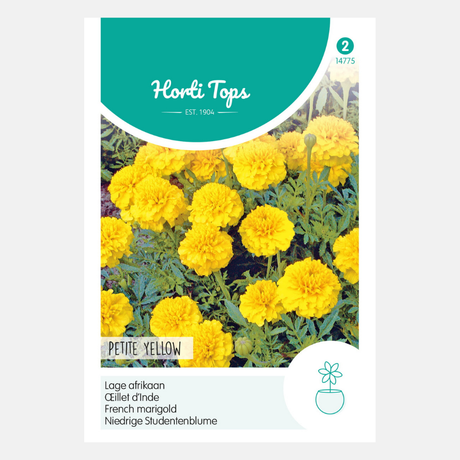
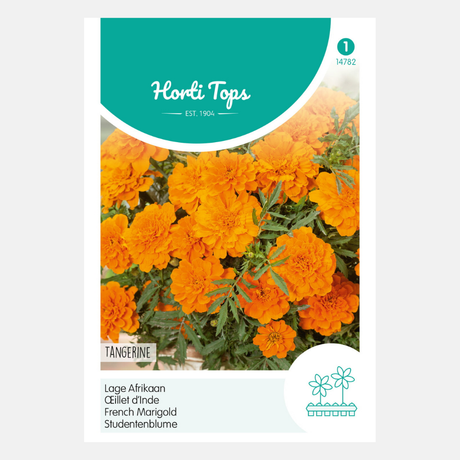
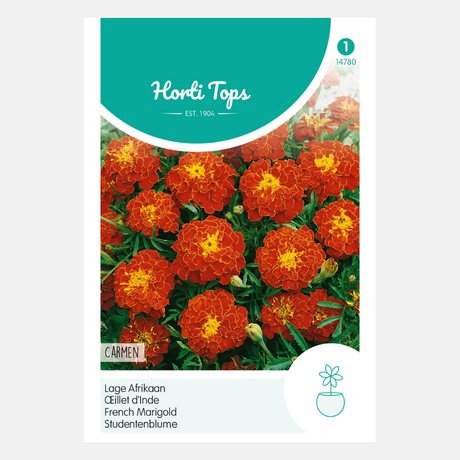
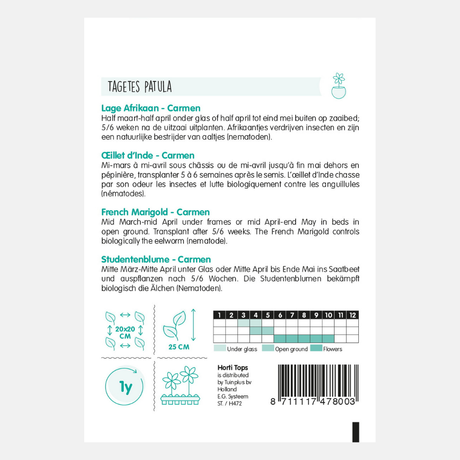
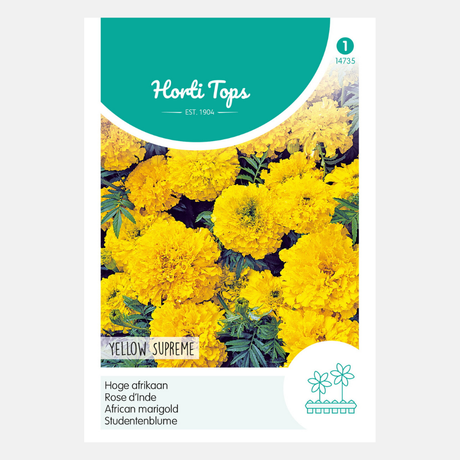
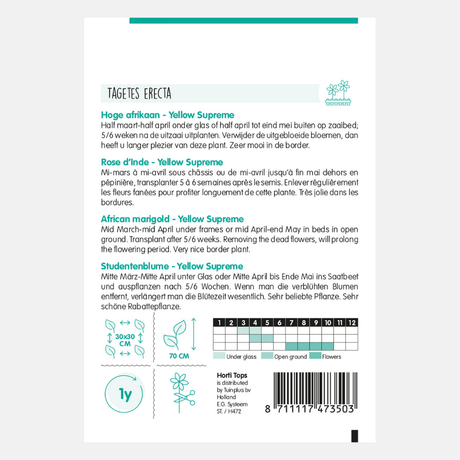
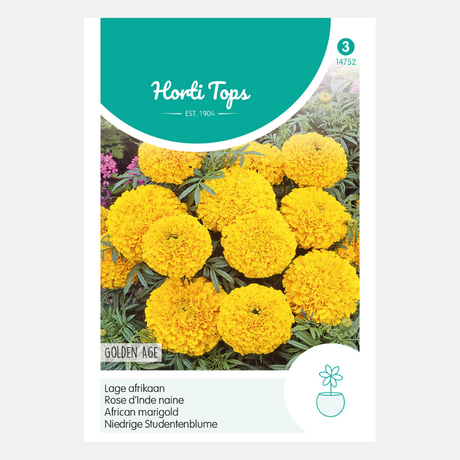
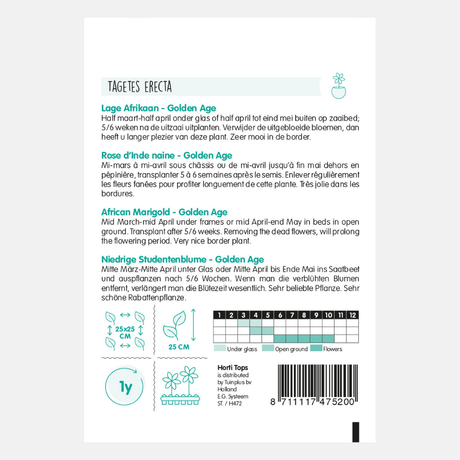
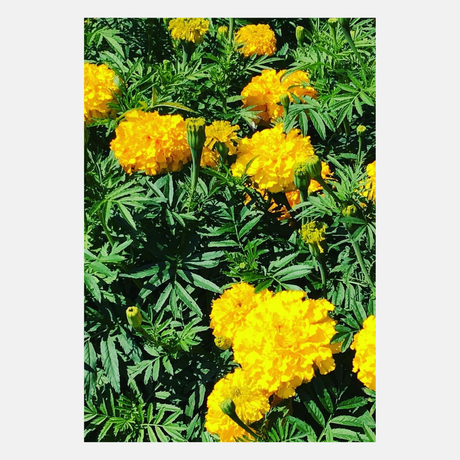
Marigold seeds in picture
Tom sowed Marigolds in 2021.
You may also like
View all-
Sold out
Zinnia elegans - 'Peaches & Cream'
Regular price 2,72Unit priceUnavailable -
-
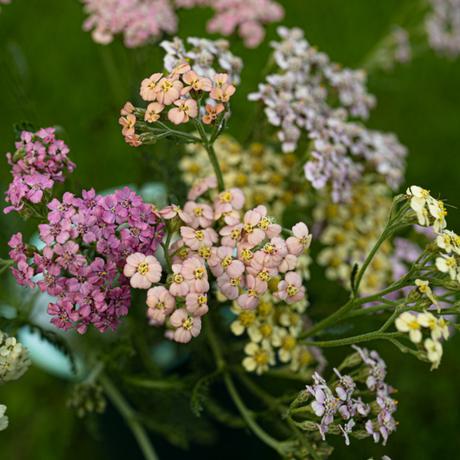
Achillea millefolium (yarrow) - 'Summer Pastels'
Regular price 2,72Unit priceUnavailable -
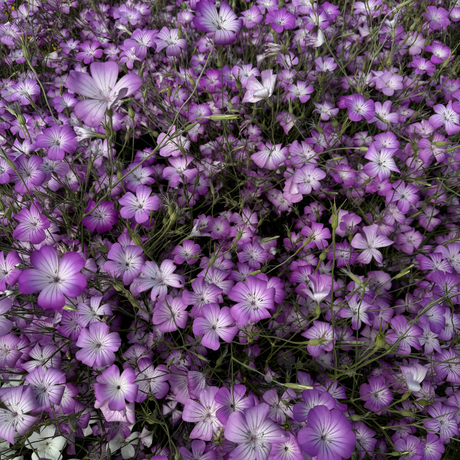
Agrostemma gracilis - 'Queen Rose'
Regular price 2,72Unit priceUnavailable -
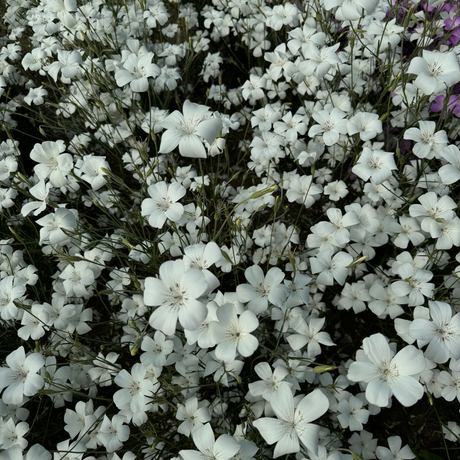
Agrostemma gracilis - 'Queen White'
Regular price 2,72Unit priceUnavailable -
Amaranthus cruentus (amaranth) - 'Hot Biscuit'
Regular price 2,72Unit priceUnavailable -
-
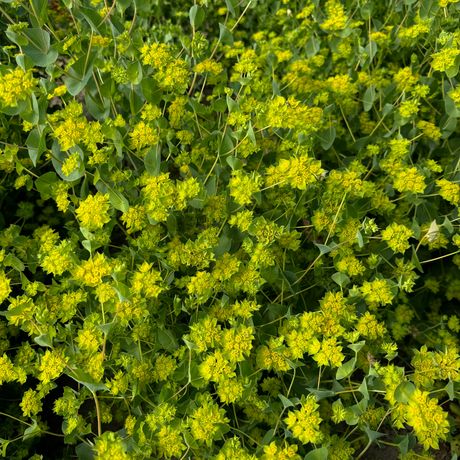
Bupleurum rotundifolium (gold screen) - Garibaldi
Regular price 2,72Unit priceUnavailable -
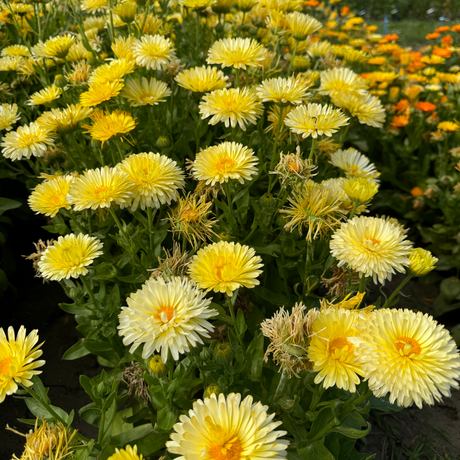
Calendula officinalis (marigold) - Double Lemon
Regular price 2,72Unit priceUnavailable -
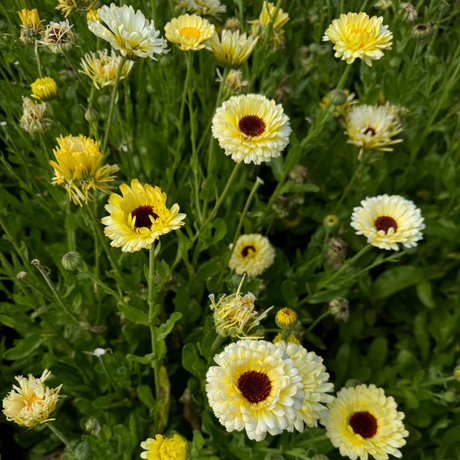
Calendula officinalis (marigold) - 'Ivory Princess'
Regular price 2,72Unit priceUnavailable
Buy Marigold seeds: colorful, sustainable and effective
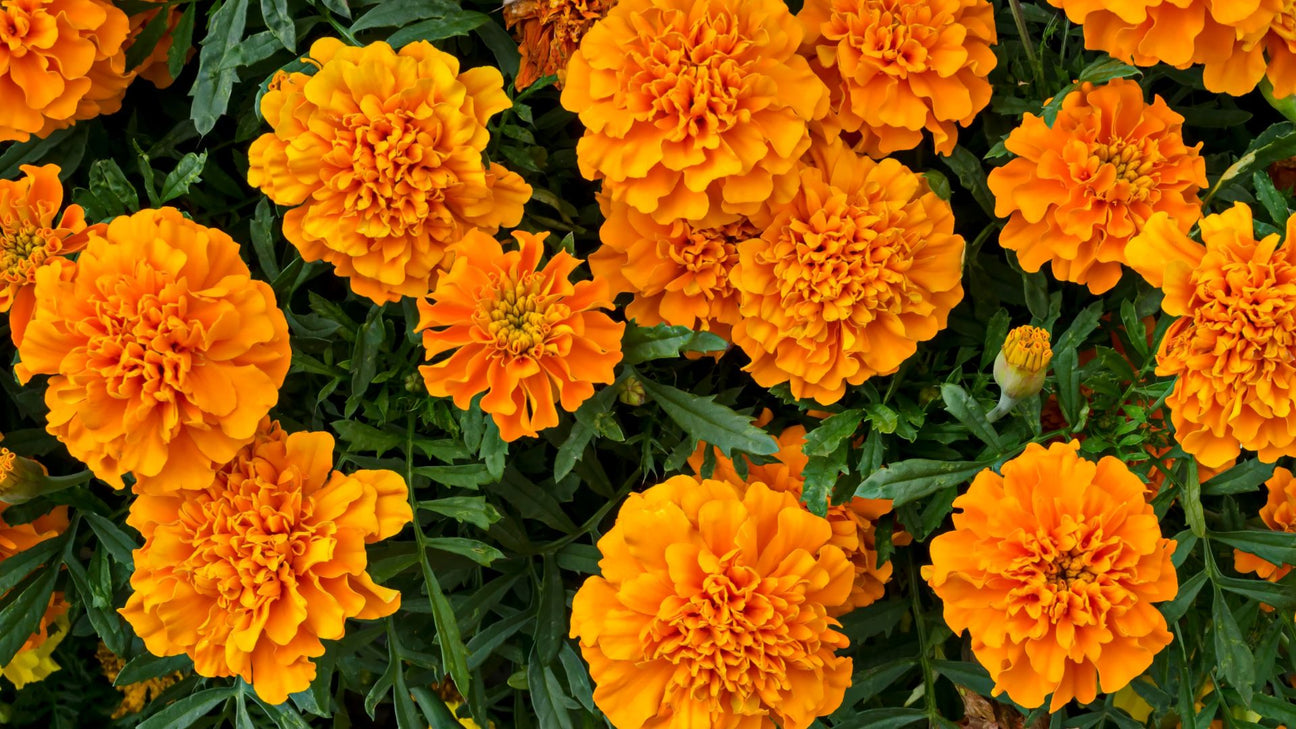
Marigolds are native to South America and Mexico. Marigolds belong to the composite family, a plant group known for their natural defense function in vegetable gardens. Various types of marigold seeds are available, each with its own unique flower shape and color, from low-growing to large-flowered varieties. Sow them among your vegetables or in pots for a cheerful accent. With marigold seeds, you bring color, fragrance, and life into your garden.
Marigolds not only give your garden a splash of color, but they also bring a bunch of handy gardening buddies into your home. These cheerful flowers (officially called Tagetes) bloom for a long time, attract bees and butterflies, and help keep your soil healthier. Whether you're a beginner picker or already have a full greenhouse: marigolds are a must-have.
At Plukkers you can easily order different types of marigold seeds and seeds, from low-growing to large and small-flowered varieties.
Why choose marigolds?
These flowers are ideal for those who want quick results without complex maintenance. Marigolds require little care, making them suitable for any gardener, even those with little experience. They propagate easily, bloom from July until the first frost, and attract pollinators such as bees and butterflies. They also act as natural pest deterrents, releasing scents that repel harmful organisms like nematodes and soil eelworms. You can also use marigold leaves in salads or dry them for decoration.
Popular varieties in the Pickers collection
Below you'll find a selection of marigold seeds from your range, with variations in flower shape and growth size:
- Marigold wild BIO: bushy, large plants with flowers that fade to red and orange. Hardy, attractive to pollinators, and ideal as interplanting in the vegetable garden.
- Marigold small-flowered organic: bright yellow flowers with a dark center. Removing the buds produces richer, fuller plants.
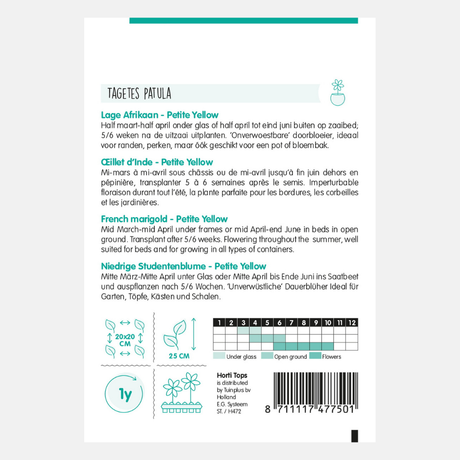
- Marigolds 'Petite Yellow': a compact 1-gram packet of yellow seeds for pots or borders. This variety also grows well in a flowerpot, ideal for the balcony or patio. Practical and cheerful in small spaces.
- Marigolds 'Petite Harmony': a mix of subtle shades of yellow and orange in a 1-gram bag. Compact and perfect for pots or flowerpots.
- Marigolds 'Bonita' – double-flowered: a richly flowering mix with soft double flowers in warm colors, ideal for edging and cutting.
How do you sow marigolds?
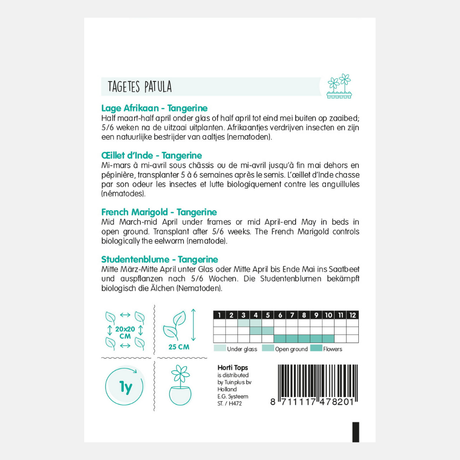
- Timing and location: You can sow marigolds under glass from mid-March. The sowing season runs from mid-March to the end of June. Sow indoors in March-April or outdoors from May in moist seed compost.
- Sowing: Sow directly onto the seedbed, cover lightly, and ensure the seedbed is well-moistened for good germination. Seedlings will emerge within 7 to 14 days.
- Hardening off: gradually acclimatise the young plants to the outdoor temperature by placing them outside during the day and bringing them back in at night over a period of about a week.
- Location and soil: choose sun and well-drained, humus-rich soil.
- Planting: Once the risk of night frost has passed (usually from mid-May), the hardened-off seedlings can be planted outdoors. Space them about 20–25 cm apart, so they have plenty of room to grow and branch. Lightly press the soil around the root ball and water generously immediately after planting.
- Care : Water during dry periods, regularly remove wilted flowers, and prevent slugs with a barrier or raised areas. Marigolds also help naturally combat aphids.
Caring for marigolds
You know the feeling – you want a cheerful, colorful garden but don't have much time for complicated care. Marigolds are your best friends! They're incredibly easy to care for and will even forgive you if you forget to water them occasionally (although they're not thrilled about that). Just give them a regular drink of water, especially after a dry spell. Keep the soil nice and moist – not soaking wet, but not dried out either. These cheerful little flowers are native to South America and Mexico, where they're accustomed to that lovely moist soil. Ideally, place them in a sunny spot where they can shine, because that's where they're happiest. They also thrive in partial shade, but for a true explosion of color, choose full sun.
Here's a handy trick: regularly cut off the spent flowers. Sounds a bit sad, but your plant loves it! It's like saying, "Come on, make more of those beautiful flowers for me." And they dutifully do. But there's another nice thing – marigolds have a certain scent that repels all sorts of nasty creatures. Ants, aphids, and those nasty nematodes (especially that nasty Pratylenchus penetrans) don't like it. Great, right? Just sow them among your vegetables and you have a natural bodyguard for your lettuce and tomatoes. Your young plants and roots are thus protected from unwanted guests.
Marigolds are annual flowers and can't tolerate frost at all – they're just as sensitive to the cold as we are! Want to sow them in the fall? Then you'll need to keep them indoors under glass, otherwise they'll freeze to death. But from mid-May, once the last frosts are over (the Ice Saints, you know), you can safely move them outside. Whether in the ground, in pots on your patio, or in a cheerful window box – they'll grow anywhere the soil stays nice and moist.
The beauty is that marigolds do so much more than just cheer you up. They also act as green manure and improve your soil. They help control weeds and keep those pesky insects away—they're truly multitaskers in your garden! By sowing marigolds, you create a healthy, inviting vegetable garden that you can enjoy all season long. And honestly? Those colorful flowers simply make you feel cheerful when you look outside.
Application in your garden
Marigolds are versatile in use:
- As edging along vegetable or garden paths
- In pots or containers on a balcony or terrace
- In combination with herbs or cut flowers
- As a natural barrier against soil pests and snails
- In addition to cabbage, carrots and onions to protect these crops from pests
Marigolds keep mosquitoes at bay through their scent, thus providing natural protection in the garden or on the balcony.
Harmful nematodes and insects die through the natural action of marigolds, meaning these flowers contribute to a healthy vegetable garden.
Their rapid growth and scent make marigolds real helpers in the garden.
Why choose Marigold seeds from Plukkers?
Plukkers provides organic seeds with high germination rates. Each package includes clear sowing and care tips. The website offers growing guides and access to a team of experts with expertise in companion planting and organic principles.
Finally, about Marigold seeds
Buying marigold seeds means choosing simplicity, color, and smart gardening. You sow quickly, maintain minimally, and reap long-lasting blooms. The Plukkers collection offers a variety of sizes and color palettes. Sow according to the best practices and give your garden the boost it deserves.