
More and more, you hear vegetable gardening friends talking about 'mulch' or 'mulching'. Mul... what?! Mulching is a gardening technique that is often associated with permaculture. In permaculture, gardeners create a living environment in a way that is ecologically sustainable and stable for both humans and animals. More on permaculture in a later article. Until recently, mulching was often viewed with skepticism by traditional vegetable gardeners, but it is gaining more and more popularity due to its many benefits. In this article, you will learn more about this technique with the strange name. For those who are already seeing millions of slugs before their eyes, read on anyway... and above all, try it out.
Table of contents:
What is mulch?

Mulch or mulching is, in short: covering the soil with organic material. Straw is often used. But for people who do not have straw or find it difficult to bring into the vegetable garden, there is good news. You can also mulch with other materials such as grass clippings, hemp fiber, Miscanthus, compost, hay, herbs (nettles or comfrey), green waste, young pruning waste, ... How thick that layer should be depends on the material you are mulching with, which you can read more about in this article.
Why mulch in the vegetable garden?
Less weeding and watering
Covering the soil has the great advantage that little to no water evaporates from your vegetable garden soil; your soil stays moister and you have to haul less water in the summer. The feared weed seeds in the vegetable garden also do not have the strength to grow through your layer of mulch. If any weed seeds do germinate, you will be able to pull them out with ease because they will be long and spindly. You therefore have to spend much less time on your knees and back weeding.
Nutrition for your soil life
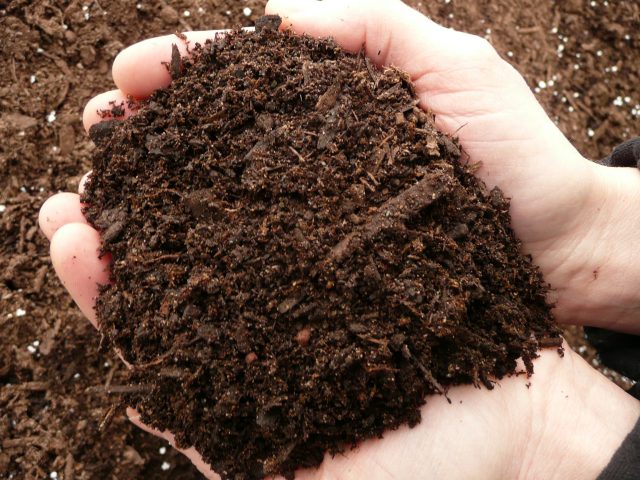
In addition to these two advantages, there is another one that stands out to me. Where the mulch layer touches the soil, soil animals come to feast on this layer as it decomposes. Thousands of soil organisms per m2 process the layer of mulch into bite-sized morsels for your plants. An earthworm enjoys the layer of grass clippings, and humus comes out of the back of its body. Bite-sized gold for your vegetable plants. Humus also makes your soil structure sponge-like and crumbly and prevents soil erosion. In other words, you get top vegetable garden soil.
When to apply mulch in your vegetable garden?
'Always', you could say. It is less recommended in periods when your soil needs to warm up, for example in early spring. I don't take that into account. My crops are two weeks later than those of people who don't mulch, but because of the good nutrient-rich soil, I make up for that later on. !! It is very important that you apply your mulch to moist soil. The rain needs time to seep through the layer of mulch, and your vegetable garden could suffer from thirst.
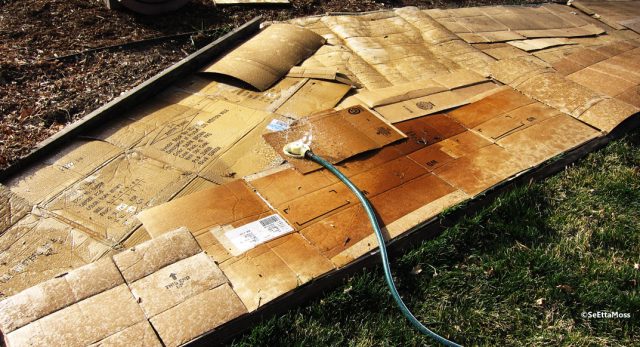
If you are about to start a new vegetable garden or vegetable bed, the easiest way is to spread large pieces of cardboard that you moisten well. (Our cardboard packaging from orders is toxin-free and glue-free and is ideal for this). The cardboard will suffocate the weeds, and the worms will have a feast by converting all the organic material in your suffocated weeds into humus. And humus... that is the brown gold of the vegetable garden.
What to use for mulching?
Straw: ideal around strawberries, zucchini, pumpkins, and other vegetables; holds moisture well
Hay: similar to straw, but richer in nutrients; can contain seeds
Leaves: excellent free mulch. You can use them whole or shredded with the lawnmower.
Wood chips: very suitable around trees, shrubs, berries, and perennials; last a long time
Hemp fiber: forms an airy, moisture-retaining mulch layer that suppresses weeds and slowly decomposes into organic matter.
Miscanthus: finely chopped elephant grass that forms a neat, firm ground cover and can last for several seasons due to its slow decomposition.
Compost: feeds the soil, stimulates soil life, and helps as mulch to retain moisture and suppress weeds.
Grass clippings: nutritious and easily digestible; preferably in thin layers so they don't rot
Kitchen waste: plant-based kitchen scraps can decompose directly on the soil and thus gradually return their nutrients to the soil life.
Cardboard boxes: unprinted/brown cardboard without plastic or tape; very effective against weeds. Often cover with compost, straw, or chips. The cardboard boxes from our packages are ideal for this!
Green manures: plants such as clover, phacelia, or rye can be mowed and left on the soil as mulch.
Pruning waste: shredded branches and twigs make good, slow-acting mulch
Mulch with straw
You can find straw at farmers or some garden centers. Depending on the region where you live, it is easier or cheaper to buy straw. For a vegetable gardener with a small garden, let's say smaller than 100m2, you can buy some small pressed bales that easily fit in the trunk of your car. They cost you about 2 euros each, so for 10 euros you can already do a lot. The bales are pressed, so when you loosen them you get a lot of volume. A 15cm layer of straw is sufficient. This layer takes a year to decompose. Preferably look for organic straw.

Mulch with hay
Just like straw, you can find hay in abundance at your local farmer in large or small quantities. The price is slightly higher (around 3 euros for a small bale). Many farmers receive subsidies to sow flower meadows. They cannot use the hay for their animals because it may contain toxic seeds. So they are only too happy if you take it off their hands. Hay is softer than straw and therefore spreads more easily. Hay also decomposes faster than straw. So if you are only starting to mulch in the spring, use hay (or grass clippings) rather than straw. Should there still be seeds present in the hay, that is not a problem when you cover the soil permanently. A 15cm hay mulch layer disappears in less than 6 months.

Mulch with RCW
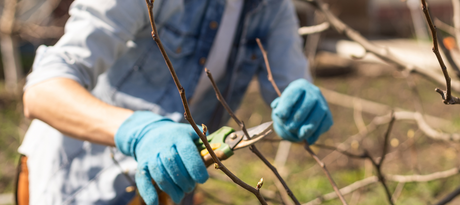
You can also use RCW, the abbreviation for Ramial Chipped Wood. RCW consists of young, fresh branches and twigs from trees and shrubs that are shredded. It is a particularly valuable mulch for the vegetable garden, because it not only covers the soil, but also stimulates soil life, humus formation, and especially fungal life.
Depending on where you live, you can sometimes find RCW easily and cheaply. For example, you can inquire with a professional pruner, arborist, or garden association. Young pruning waste often has to be removed and can be used excellently in the garden after being shredded.
A mulch layer of about 5 cm of RCW is usually sufficient. A much thicker layer is not necessary and can become less airy, especially when the material is very fine. For RCW, young wood from deciduous trees and shrubs is preferred. Coniferous wood can also be processed, but for classic RCW, deciduous wood is preferred.
Note: regular wood chips are not the same as RCW. Wood chips can also contain thicker branches and older wood and therefore generally decompose more slowly. It is, for example, very suitable for garden paths. RCW consists specifically of young branch and twig wood and is therefore particularly interesting as mulch and soil improver.

Mulching with leaves
If you have trees in your garden, collect the leaves in the autumn and place them on your vegetable garden beds. If you have large leaves like those of maple, plane tree, or chestnut (which decompose very slowly), run over them once with your lawnmower. They will be bite-sized for the worms in your garden and will also blow away less quickly in the autumn. So you kill two birds with one stone. You get rid of your stray leaves and you get to mow your grass. The combination is a mulch layer that will provide sufficient carbon and nitrogen to your vegetable garden. Substances that your vegetable garden plants really need in the spring. No trees in your garden? Same recipe again. Take a walk in your neighborhood and chat with owners of gardens with trees. They will welcome you with open arms if they know you will take their leaves away.

Mulching with green manure
Many vegetable gardeners sow green manures in early autumn or early spring. Green manures help to improve soil structure and also add nutrients to the soil for future crops. When you mow the green manure before it goes to seed, you have heaps of organic material for mulching. Never work mulch into the soil; always leave it on top. Not working it in is also less work :)
Mulching with kitchen waste
Nothing from the garden goes to waste. Don't hesitate to throw all your peels, of whatever kind, onto your vegetable beds. I even use my lemon peels in small pieces. Don't think it looks nice? Hide them under the mulch layer. They will entertain the slugs that are present in every vegetable garden anyway, and that way they will leave your vegetables alone.
Mulching with miscanthus
Miscanthus, also called elephant grass, is a very fine material to use as mulch in the vegetable garden. Apply a layer about 5 cm thick. The finely chopped stems form a neat, sturdy ground cover that protects the soil from drying out and gives weeds less of a chance to grow. A big advantage of miscanthus is that it decomposes slowly. As a result, the mulch layer stays in place for a long time and you don't have to replenish it as often. During decomposition, organic matter is gradually added to the soil. Moreover, miscanthus is light and easy to spread between your vegetables, strawberries, herbs, and other plants.
Would you like to try it yourself? In our webshop, you will find miscanthus litter, ready-to-use as a mulch layer in your garden.
Mulching with cardboard
Cardboard is very easy to find. Visit your local bike shop, greengrocer, or electronics store. Try to find unbleached, unprinted cardboard. The cardboard from our packages is toxin- and glue-free and ideal to use as mulch. Earthworms love cardboard. It is best to hold the cardboard down with tiles or stones, which will prevent it from blowing away. If you are expecting a dry autumn or winter, it is best to wet the cardboard thoroughly when you apply it. This way, the decomposition of the weeds and the cardboard by the worms can start immediately. You can also cover the cardboard with a layer of grass clippings; this way, you create a delicious lasagna for your worms. Without grass clippings, cardboard is also ideal for your root vegetable beds where you sow directly. You can remove the cardboard and immediately turn the soil and sow.
Mulching with hemp fiber
Hemp fiber is also very suitable as mulch material. It forms a light and airy layer around your plants that helps to retain moisture in the soil and slow down weed growth.
Apply a layer of about 2 to 3 cm on weed-free soil and then water the hemp fiber thoroughly. This allows the material to absorb water and stay in place better. Over time, the hemp breaks down and the organic material contributes to the soil.
Hemp is also a renewable resource and therefore an interesting choice for those looking for natural mulch. Our hemp litter is made from organically grown hemp fibers and is ready for use in the vegetable garden. We also have hemp cloth, which is ideal for mulching a vegetable bed with perennials. Think, for example, of small fruit or strawberries.
What about slugs?
The biggest argument against mulching, read everywhere in every Facebook vegetable garden group: "Mulching stimulates the reproduction of 'those slimy things that eat all our vegetables'" (slugs). But you have to know one thing. Slugs are like sharks in the sea. They feed mainly on vegetation that is starting to decompose. After ingesting and digesting that partially decomposed vegetation, they poop and feed your vegetable garden. Know that their presence will immediately attract predators. Birds love to hop around in your mulch in search of numerous mollusks. Your vegetables will be left alone. In autumn, toads, which are great lovers of slugs, will hide under the mulch from the frost. If you are lucky enough to have hedgehogs in your vegetable garden, don't forget to throw some branches and leaves in a corner of the garden. The Hedgehog family in your garden will naturally regulate your slug population.
Frequently asked questions about mulch
What is mulch?
Mulch is a layer of organic material used to cover the soil around your plants. Examples include straw, grass clippings, leaves, compost, wood chips, hemp fiber, or miscanthus. A mulch layer protects the soil and, in the case of organic materials, is gradually broken down by soil life.
Why use mulch in the vegetable garden?
Mulching helps to keep moisture in the soil for longer, suppresses weeds, and protects the soil from drying out and heavy rain. Organic mulch also feeds soil life and contributes to the buildup of organic matter as it decomposes.
What is the best mulch for the vegetable garden?
The best mulch depends on your crops and the material you have available. Straw, grass clippings, compost, miscanthus, and hemp fiber are all suitable for the vegetable garden. Leaves and freshly chipped wood (BRF) can also be used excellently as mulch.
How thick should a layer of mulch be?
How thick you apply mulch depends on the material. For many coarse mulch materials, a layer of about 5 cm is a good guideline. Fine materials can often be applied more thinly. Hemp fiber, for example, can be applied in a layer of about 2 to 3 cm.
When is the best time to mulch?
You can mulch almost all year round. In the spring, mulch helps to suppress weeds, and later in the season, the mulch layer protects the soil from drying out. Mulching is also interesting in the autumn to leave the soil covered and protected for the winter.
Does mulch help against weeds?
Yes. A sufficiently thick mulch layer blocks light from germinating weeds, making it harder for many weed seeds to germinate and grow. It is best to remove persistent root weeds before applying the mulch.
Do you have to replace mulch every year?
Organic mulch decomposes gradually and usually does not need to be completely removed or replaced. Check regularly how thick the mulch layer still is and replenish when necessary. The decomposed material can simply remain on the soil.
Can you apply mulch directly around plants?
Yes, but leave some space around the stem for young plants. A thick, constantly moist mulch layer right against the stem can cause problems. Therefore, spread the mulch around the plant without piling it all the way up against the stem.