

- Regular price 2,14Unit priceUnavailable
-
- Regular price 3,07Unit priceUnavailable
-
- Regular price 3,82Unit priceUnavailable
-
- Sold out
Parsnip 'Halflange van Guernesey' BIO
Regular price 4,72Unit priceUnavailable -
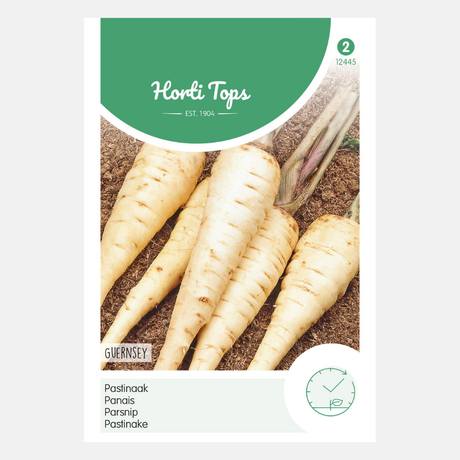
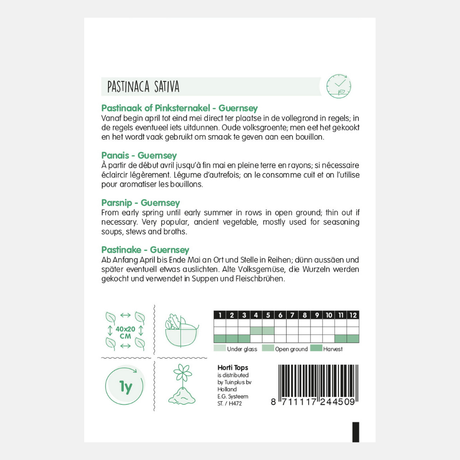
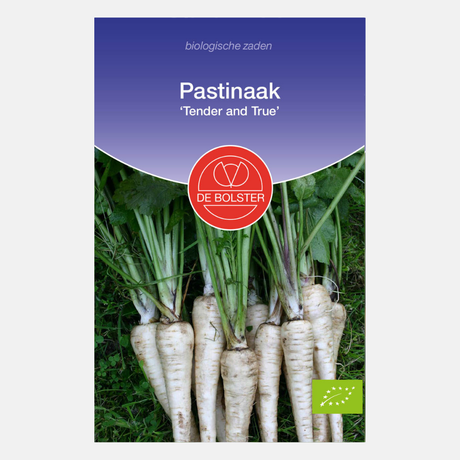

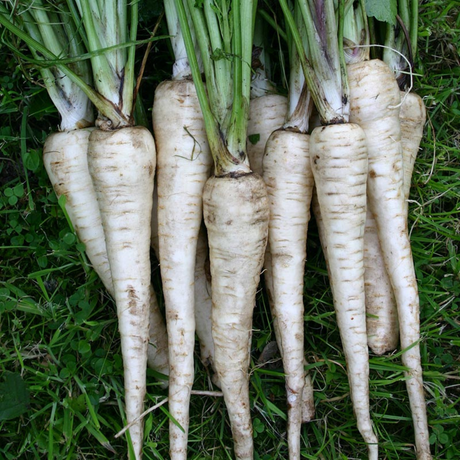
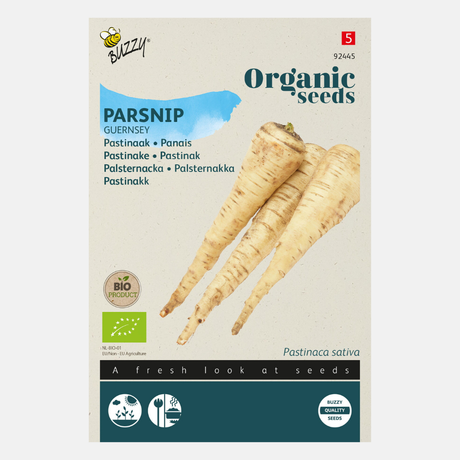
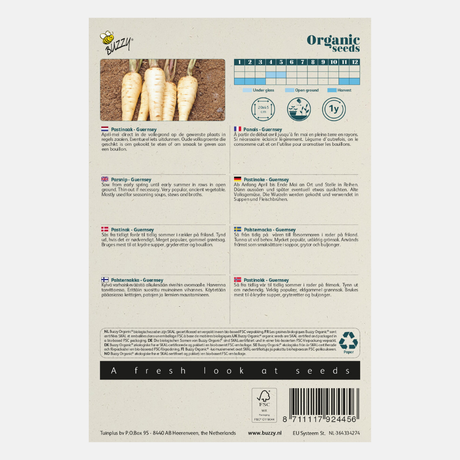


Parsnip in picture
In this video Tom harvests mega parsnips

Growing guide for growing parsnips
You may also like
View all-
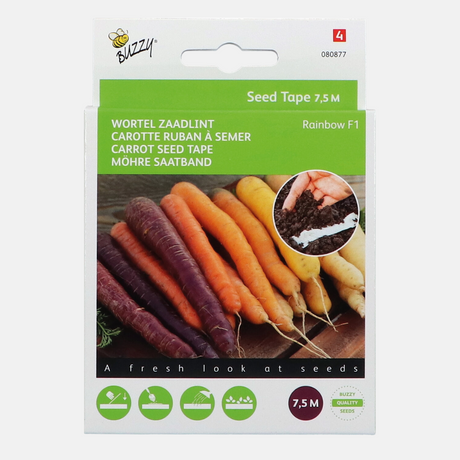
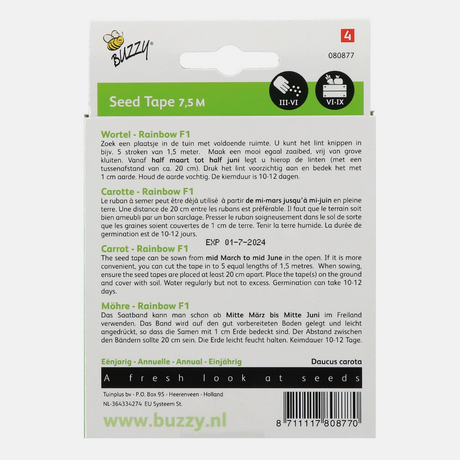
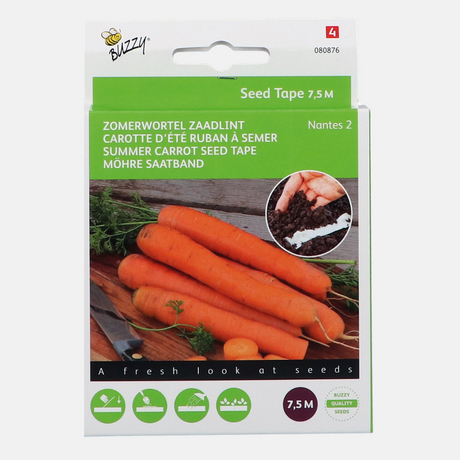
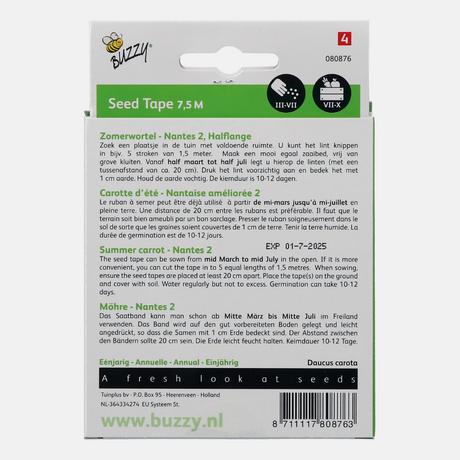
Seed tape Seed tape 'Carrot Rainbow' F1
Regular price 3,28Unit priceUnavailable -
-
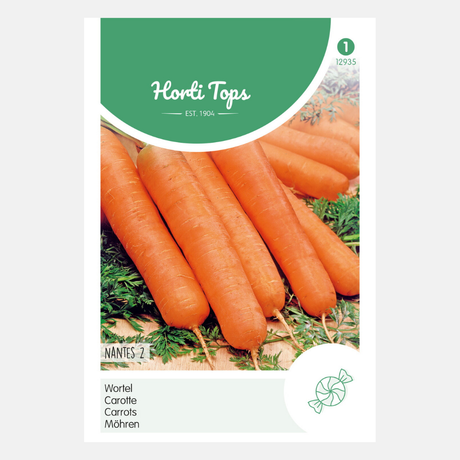
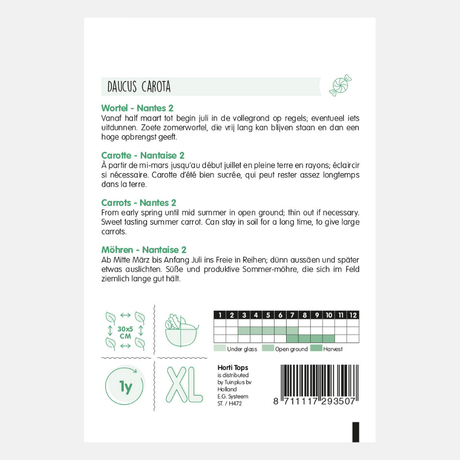
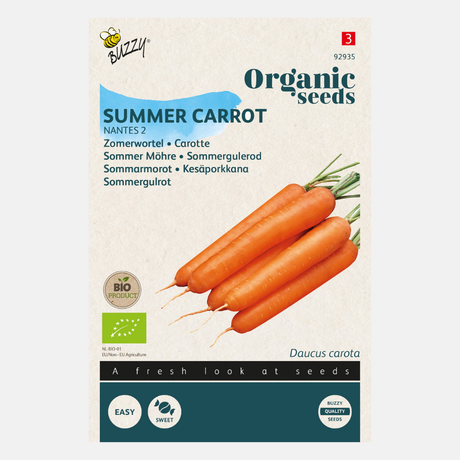
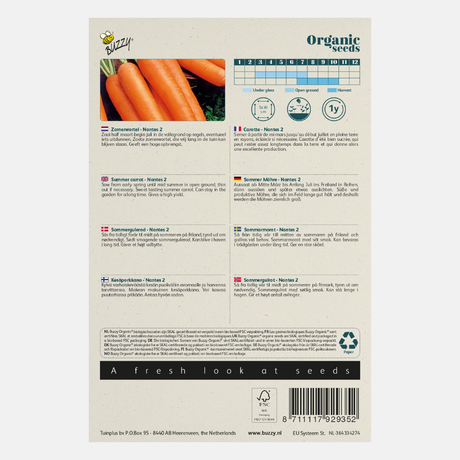
Carrot 'Nantes 2' - medium length
Regular price 1,63Unit priceUnavailable -
-
Regular price 3,28Unit priceUnavailable
-
-
Regular price 2,14Unit priceUnavailable
-
-
Regular price 3,28Unit priceUnavailable
-
-
Regular price 3,28Unit priceUnavailable
-
-
Regular price 2,14Unit priceUnavailable
-
-
Regular price 2,58Unit priceUnavailable
-


Parsnip Seeds: Complete Guide to Sowing and Growing
Key Points
- Sow parsnip seeds directly in the open ground from April to mid-May for best results.
- This forgotten vegetable from the umbelliferous family takes 18-20 weeks from seed to harvest.
- Fresh seeds are essential because parsnip seeds lose their germination power within 2 years
- The roots can grow up to 30 cm long and can be harvested from October to March
- Parsnips that can withstand frost develop a wonderfully sweet flavour with a subtle aniseed taste
You're probably familiar with those long, white carrots you sometimes see in the produce aisle. Parsnips, also known as white carrots, are one of those vegetables everyone has seen but perhaps never grown themselves. And that's a real shame, because this forgotten vegetable is not only delicious but also surprisingly easy to grow in your own garden.
Parsnips taste a bit like a cross between a carrot and a potato, with a sweet undertone and a hint of anise. Perfect for casseroles, soups, or simply roasted as a side dish. And the best part: once planted, you can harvest them all winter long. They can easily withstand frost—in fact, the flavor only improves.
In this article, I'll walk you through everything you need to know about parsnip seeds, from the best time to sow them to how to care for them and ultimately harvest them. I'll also tell you where to buy the best organic parsnip seeds and what varieties are available.
What are Parsnip Seeds?
Parsnips (Pastinaca sativa) belong to the umbelliferous family, just like carrots, parsley, and celery. It's actually a forgotten vegetable that used to be much more important than it is today. Before the potato arrived in Europe, parsnips were an important food crop. The long, white root can grow up to 20 to 30 centimeters long and has a characteristic shape that tapers towards the bottom.
In terms of flavor, parsnips are best described as sweet with hints of carrot, potato, and anise. This sweetness is most pronounced after the plant has experienced frost, when it converts starch into sugars. Restaurants are increasingly appreciating parsnips for their unique flavor profile and versatility in the kitchen.
The plant is biennial, meaning it develops roots in the first year and flowers and produces seeds in the second. For us gardeners, this means we harvest the delicious roots in the first year. Parsnip seeds themselves are relatively large and flat, making sowing easier than with many other vegetables.
Parsnips are packed with nutrients. They contain plenty of vitamin C, folate, and potassium. They're also high in fiber, which is good for your digestion. And because parsnips are naturally sweet, you don't need to add much to make them delicious.
When to Sow Parsnip Seeds
The right time to sow parsnip seeds is crucial for a successful crop. The best time is from early April to late May, but mid-May is actually the latest time you can sow for a good harvest in the fall and winter.
The soil must be at least 10°C before you can start sowing. Sowing too early, for example, as early as March, carries risks. The seeds may germinate poorly due to the cold soil, and young plants may be damaged by late night frosts.
Note regional differences within the Netherlands. In the south, you can often start a little earlier than in the north. On the coast, you can usually sow a little longer due to the moderate temperatures. But in general, wait until the soil feels nice and warm when you touch it.
The weather also plays a major role, of course. A cold spring means you have to wait, while a warm spring gives you the chance to start early. Keep an eye on the weather forecast and choose a period with stable, mild weather for sowing.
Sowing Calendar per Month
April: Ideally, start in the second half of the month. The soil is usually warm enough then, and the risk of night frost decreases. Start with a small selection to test how your soil reacts.
May: This is the best month for sowing parsnips. You can sow them until mid-May for a good harvest. After mid-May, it becomes increasingly difficult to get the crop ripe in time for winter.
Parsnips combine well with other root vegetables in your vegetable garden. For example, sow your carrots and parsnips together in April, so you can tend them together. For successive harvests, you can sow a new row every two weeks, but keep in mind the long growing season of about 20 weeks.
How to Sow Parsnip Seeds
A good start begins with soil preparation. Parsnips prefer light, loose, well-drained soil. Sandy soil is more ideal than heavy clay soil, as the long roots can develop more easily in loose soil. Work the soil well to a depth of about 30 centimeters—remember, those roots grow long! Parsnip seeds should be sown in sunny, fertile soil.
Sowing distance is important for good results. Maintain a 30-centimeter spacing between rows and plant the seeds about 15 cm apart. If you notice more seeds germinating than expected, you can always thin them out after emergence. The sowing depth should be about 1 to 1.5 centimeters—no deeper, as the seeds will have difficulty breaking through the soil layer.
Always use fresh seeds, no older than one year. Parsnip seeds lose their germination power quickly, much faster than other vegetable seeds. Old seeds germinate poorly or not at all, which can be a major disappointment after waiting weeks.
Step-by-Step Sowing Process
- Make furrows: Use the handle of your rake to create straight, shallow furrows in the soil. Gently press the handle into the soil to a depth of about 1.5 centimeters.
- Sow the seeds: Place the seeds about 15 cm apart in the furrows. Their size makes it easy to place them individually.
- Cover: Gently spread soil over the seeds. Make sure the layer of soil is no thicker than 1.5 centimeters, otherwise they will have trouble germinating.
- Mark the rows: Place stakes or use labels to remember where you've sown. Parsnips take 2-3 weeks to germinate, and it's easy to forget where they are.
- Watering: After sowing, give the seeds a good watering, but avoid overwatering. The soil should remain moist during the germination period, but not soaking wet.
During germination, which takes 2 to 3 weeks, it's important to keep the soil slightly moist. Check regularly, especially in dry weather. Once the first seedlings emerge, you can thin them out after a few weeks if they're too close together.
Caring for Parsnip Plants
Once your parsnips have established, they don't really need much care. Weeding is necessary, but do so carefully. The roots grow close to the surface, so don't hoe too deeply. It's best to pull weeds by hand or use a hand rake to loosen just the top layer of soil.
Watering is primarily done during dry periods. Parsnips have a deep taproot that can easily absorb water from deeper soil layers, so you don't need to water daily. A thorough watering once a week is usually sufficient, unless it's extremely dry.
Compost is best for fertilization. Work it into the soil in the fall before sowing, so the plants have nutrients available throughout the growing season. Avoid too much nitrogen, as this results in abundant foliage but small roots.
Watch out for diseases and pests, although parsnips are generally quite hardy. Sometimes aphids appear, which you can spray off with water or treat with soapy water. Snails also like the young leaves, so keep an eye out for them in the first few weeks.
An important warning: Parsnip leaves can cause skin irritation in sunny weather. Wear gloves when working among the plants, especially on warm, sunny days.
Harvesting Parsnips
Harvesting parsnips is actually the most enjoyable part of the whole process. The harvest season runs from October to March—a very long period during which you can pick fresh parsnips from your own garden. But the best time is actually after the first frost, because then the flavor becomes much sweeter and fuller.
Frost has a special effect on parsnips. The cold converts starches into sugars, giving the roots their characteristic sweet flavor. Parsnips that haven't experienced frost still taste good but lack the deep, sweet flavor for which the plant is known.
A digging fork is necessary for actual harvesting. Insert it into the soil next to the plant and gently loosen the root. Never pull hard on the leaves, as this will break the root, leaving most of it in the ground. The roots can be quite deep.
Harvested parsnips store well. They'll keep for weeks in a cool, dark place. You can also store them in moist sand in a cold cellar or garage. Or you can simply leave them in the ground and harvest as needed – they can tolerate frost well.
You can tell a parsnip is ripe by its size – they should be at least 15 cm long before they're truly delicious. It's best to leave undersized carrots for a while, unless you plan to use them as "baby parsnips."
Producing and Storing Parsnip Seeds
If you want to produce your own parsnip seeds, you need to consider the plant's two-year life cycle. In the first year, the root grows, and in the second year, flowering and seed production occur. You can collect parsnip seeds yourself by leaving a few plants in the ground.
To save seeds, leave a few of your best plants in the ground over winter. Choose plants with good, straight roots and strong growth. These plants will overwinter and begin growing again in spring.
In the second year, usually around March, the plant begins to produce new leaves. Later in the season, around June to September, it flowers. Parsnips then develop large, umbel-shaped flowers that look very decorative. After flowering, seeds form.
The seeds are ripe when the umbels turn brown and feel dry. This is usually in the fall of the second year. Cut the umbels and hang them in a dry place to dry. The seeds will fall out naturally or you can gently shake them out.
To store seeds, store them in a cool, dry place in an airtight container. Label them with the year of harvest, as parsnip seeds retain their germination potential for up to two years. It's actually best to use them within a year for best results.
Popular Parsnip Varieties
There are several parsnip varieties available, each with its own characteristics. A popular variety is 'Tender and True,' which is known for its ease of cultivation and good frost tolerance. This variety usually produces beautiful, straight roots and has a reliable harvest. Tender and True is a popular parsnip variety known for its long, tapered roots and sweet flavor. Other popular parsnip varieties include 'White Gem' and Guernsey.
Wild parsnip (Pastinaca sativa) grows naturally in many parts of Europe, but it's not the same as the cultivated varieties. Wild parsnips tend to have smaller, tougher roots that are less suitable for consumption. For your vegetable garden, it's better to choose a cultivated variety.
Other available varieties vary primarily in root length, thickness, and growth rate. Some are better suited to heavy soil, while others thrive in lighter soil. Ask at your garden center for the variety that best suits your circumstances.
Organic Parsnip Seeds
More and more gardeners are choosing organic parsnip seeds. These seeds come from plants grown without artificial fertilizers and chemical pesticides. You can recognize organic seeds by quality marks such as EKO or Skal certification.
The benefits of organic seeds go beyond just the absence of chemicals. Organic seeds often come from plants selected for their natural resistance and good flavor. They are also better adapted to organic cultivation methods.
There are price differences between organic and conventional seeds, but usually not very significant. Organic seeds cost a bit more, but considering how many plants you get from a single packet, it's not too bad. Availability is improving – most suppliers now have organic options.
Where to Buy Parsnip Seeds
At Plukkers.com of course :)
When comparing prices between different suppliers, don't just consider the price of the packet itself, but also the number of seeds it contains. Sometimes you pay a little more, but you get many more seeds. Don't forget to factor in shipping costs when purchasing online.
Quality assurance is important for parsnip seeds due to their short shelf life. Buy only from suppliers who list the year of production and offer guarantees on germination. The seed companies Plukkers partners with even perform germination tests.
A handy tip: add parsnip seeds to your shopping cart if you're already ordering other seeds. This way, you can split the shipping costs among multiple products, saving you money.
Frequently Asked Questions
Why aren't my parsnip seeds sprouting?
The most common reason is that the seeds are too old. Parsnip seeds quickly lose their germination power, often after just one year. Always check the date on the package and buy only fresh seeds. Another cause could be that the soil is too cold – wait until the temperature is at least 10°C.
Can I store parsnip seeds for several years?
Unfortunately, not. Parsnip seeds retain their germination potential for a maximum of 1-2 years, and after the first year, germination rates decline significantly. It's better to buy fresh seeds annually than to save old seeds that likely won't germinate.
Can parsnips be grown in pots?
Theoretically, yes, but it's not ideal. Parsnips develop long taproots that require a lot of space. You'd need a very deep pot (at least 40 cm), and even then you'll likely get smaller roots than in the ground. For best results, plant them in the vegetable garden.
How do I prevent parsnips from branching?
Branched parsnips usually develop in rocks or hard soil. Ensure well-loosened, stone-free soil to a depth of at least 30 cm. Excessive fertilization can also cause branching, so be moderate with fertilizer. Constant moisture is also important – alternating dry and wet periods can disrupt root growth.
What is the difference between wild and cultivated parsnips?
Wild parsnip grows naturally in roadsides and meadows, but has smaller, tougher roots that are less suitable for consumption. Cultivated varieties are selected for their size, flavor, and texture. For your vegetable garden, always use cultivated varieties, not seeds from wild plants.