
🌱 Sowing & planting
- Sowing depth: 2.5 cm on clay soil, 5 cm on sandy soil
- Sowing distance: 10-20 cm
- Sprouting: shallots are best planted with seed shallots (small shallots from which several new shallots grow)
- Planting distance: 15 cm between plants, 25 cm between rows
- Planting out as: seeded shallots are planted directly; several new shallots will form from one seeded shallot
- Growth cycle: approx. 150 days
📅 Growing times throughout the year
- Yellow shallot: plant in late March-April; harvest in late June-August.
- Brown shallot planting: plant early February-March; harvest early June-mid August.
Start cultivation (plants)
Harvesting
JAN FEB MAR APR MAY JUN
Jul Aug Sep Oct Nov Dec
Yellow shallot (outside)
Brown shallot (outside)
🏠 Inside
🪟 Greenhouse / conservatory
Outside
📘 Basic information
- Crop group: Root crop
- Crop family: Onion family
- Height: 40-60 cm
- Growth cycle: approx. 150 days
- Frost resistant: no
- Root system: 20-30 cm
- Preferred soil: pH 6.0-7.0, loam soil
- Fertilization: well- composted soil
🌞💧 Pitch & water
Location: 🌞 lots of sun
Watering: 💧💧 water moderately
🤝 Good & Bad Neighbors
Good neighbors
- Beet
- Root
- Warmoes
- Swiss chard
- Chamomile
- Salad
- Strawberry
- Fruit trees
- Nightshade family (tomatoes, peppers , paprika , eggplant , ...)
- Coal
Bad neighbors
❗ Dangers & Concerns
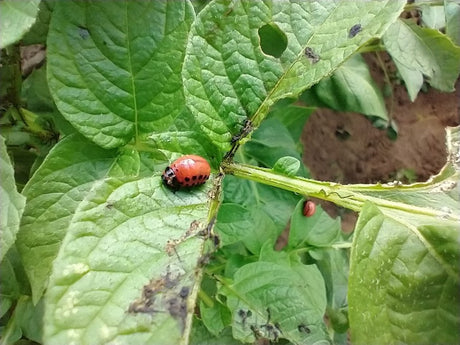
- Susceptible to onion fly; protect the shallots with insect netting .
🧺 Harvesting & storing
Shallots can be harvested at any time. They are fully ripe when the tops and foliage turn brown.
Choose a sunny day, harvest the shallots, and leave them on the ground for a week to dry the roots and leaves. Then, cut off the dead leaves.
Let the shallots dry for another two to three weeks in a warm, well-ventilated place. After that, they'll be well dried and will keep for a long time.
🍽️ Nutritional value
Per 10 g raw shallot:
- 7 kcal
- 0 g fat
- 1.7 g carbohydrates
- 0.2 g protein
- 0 g fiber
- 0 g sugar
- Vitamins: A, B6, C
- Other: potassium, folic acid and manganese