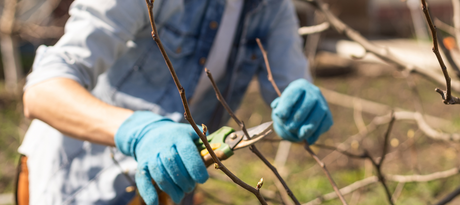


“April is progress: every sowing you do now makes your summer richer.” Tom, Plukkers
Table of contents:
April is the month where we can work outside more and more, and our plants don't all have to stay indoors anymore either. Getting started outside means a runny nose, the sun on your face, and while you're busy, you can already feel it: the ground is finally getting a bit warmer. The soil is warming up slowly, but we shouldn't get overconfident. Many seeds can go directly into the ground, but many cannot yet. Only next month in May can we fully go wild with direct sowing in open ground.
For an overview of 'sowing in April', we naturally refer you to our sowing calendar for April, where you can clearly see what you can sow indoors, in the greenhouse, or just outside in the open ground this month. Do you want our full Plukkers story for April? Then by all means, read and watch on.
What's all in this "sowing in April" blog?
What can you sow indoors in April?
Which crops should you start in your greenhouse or conservatory in April?
Which seeds can be sown in the open ground this month?
What can I harvest or admire in April?
What chores do we do in our vegetable garden in April?
What are the most frequently asked questions about the vegetable garden in March?
If you aren't a reader but rather a viewer, we won't keep you in suspense any longer; you can watch the April version of our YouTube series Grow it yourself here:
🏠 What to sow indoors in April
As always, I'll tell you my sowing strategy indoors for this month. The individual crops and their cultivation can be found further in the article, or you can see an overview immediately in our sowing calendar for April. Which crops do I sow indoors and what chores do I do inside?
- In April, I sow fast-growing fruit vegetables. By that, I mean: pumpkin, zucchini, melon, cucumber, gherkin, corn, ... Coincidence or not, they all have fairly large seeds. That might help you remember them. You sow them in a slightly larger tray or even directly in a p7 or p9 pot. They are ready for transplanting within 4 to 6 weeks.
- Not only heat-loving fruit vegetables, but also heat-loving annual herbs are on the agenda. Think of coriander, basil, and dill.
- You might not immediately think of it, but typical winter brassicas like Brussels sprouts, kale, or curly kale are also on the agenda for the first time.
- April is also the month to sow flowers. They need an average of 6 weeks to grow, which is ideal for planting out after the Ice Saints in mid-May.
- Another one not to forget this month is autumn and winter leeks. The summer leeks are now ready for trimming, but we mustn't forget the later leek crops.
- And then, of course, there are the succession sowings of all crops from the previous months. Why not sow broccoli, cauliflower, red beets, or lettuce again? If you sow now, you'll immediately have successors for the first plants you'll be harvesting soon.
🏠 Tasks for the vegetable garden indoors in April
Besides sowing in April, there are also some tasks inside that you shouldn't forget. I've listed them for you.
- Keep your seeds organized. Collect the opened bags and sort them alphabetically or by sowing period. I know many people who organize the bags in the order they will be sowing them next time. Tomatoes go to the very back of the row, and picking lettuce comes more to the front because it is sown in several batches per year. I use seed folders to keep my seeds neatly organized.
- Very important! Several plants have been in their potting soil for more than 6 weeks. Just think of the p9 pots with hot peppers, bell peppers, and eggplants. Slowly, the nutrients have disappeared from the soil, and the plants are begging for some extra food. You don't have to put them in a larger pot. You can add some liquid tomato fertilizer to the water that you pour into the base tray. This way, the nutrient-poor soil can soak up delicious food from the bottom through the holes of your plant pots.
- Hot peppers and bell peppers. No, we aren't going to sow them, but we are going to do something else. There are 2 tasks, and you choose which one of the two you do. Either you remove all fruits and flowers. We prefer to let the plants grow strong now rather than having energy go into the production of flowers and fruits. Another option is to top the plants at 2, 3, or 4 leaves. Don't do this after April 15th, because then your plants won't have enough time to grow new shoots in the axils of the remaining leaves.
- In April, I also top my summer leeks to 10-12 cm high. It's not the intention that my leek plants grow half a meter tall. The intention is to get nice, thick, sturdy plants, and you get that by cutting them.
- For the rest, we try to keep things tidy and transplant plants from compressed soil blocks or trays into pots. Plants that are cold-hardy, such as summer leeks, brassica plants, leafy greens, and herbs like parsley, can go to the greenhouse or cold frame. If you don't have that, put them in a cool, bright place in your house. An extra grow light can be useful if it turns out you have sown a bit more than expected.
🪟 What to sow in the greenhouse or chores in the greenhouse
It might sound boring, but there is not much to do in the greenhouse in April. In February, we sowed rows of cold-loving plants that we are already partially harvesting now (carrots and beets need a bit more time than lettuce, spinach, radishes, etc.). In March, we improved our soil and planted out the greenhouse crops. And we also keep garden fleece or a small heater on hand just in case there is still a frost.
The only thing we have to do is water our seedlings and small plants in the greenhouse beds. And that isn't very often at this time of year. Weigh your pots regularly, feel the soil with your finger, and give them a drink when necessary.
At the beginning of April, I do plant out a few early cherry tomatoes. These give me tomatoes from the garden a month earlier—at the end of May or beginning of June. My children love them. You can also choose bush tomatoes like Tiny Tim in pots. These are also very early and handy to move indoors if frost is forecast.
You might also want to look at your support materials for the tomatoes and climbers in the greenhouse (cucumbers, melons, etc.). In my case, I check to see if I have enough tomato clips and growing twine.
What do I sow outdoors in the open ground?
In February, the list was short, but for April, I would like to refer you to the sowing calendar for April. The list has become so long...
What I will share is that I use a lot of seeds on seed tape directly in the garden. I rarely sow seeds just by hand. This way, I don't have to thin them out and I always get good germination.
In the beds where I sow directly (especially root vegetables, flowers, and leafy greens), I have mulched with finer material like hemp fibers or miscanthus mulch, rather than straw or hay, which take up more volume in the vegetable beds. Straw and hay are also less easy to clear away in a narrow row for sowing. A thin layer of hemp or miscanthus can easily be pushed aside with a hand hoe or cultivator. Once the plants have germinated and grown, I top it up with extra hemp or miscanthus to retain moisture in the soil and suppress weeds.
Chores in April outdoors in the vegetable garden
In April, I do a few important chores in the vegetable garden that are crucial for the rest of my season. They ensure that from next month on, I can enjoy my garden without any worries.
Setting up my tunnel hoops and mesh cages against intruders
In the vegetable garden, you are not the only one who wants to eat well. Insects, butterflies, and birds are also thinking about their well-being and their urge to reproduce. That is why in April, I place tunnel hoops or mesh cages in the garden. It just depends on what you like working with. Here is an overview of what I protect:
- Cabbage bed: Do you not want masses of green caterpillars eating your cabbage plants down to the ribs? Or do you not want the cabbage fly laying its eggs at the base of your cabbages? Then place coarse insect netting over your cabbage bed.
- Carrot fly: The carrot fly loves the smell of carrots, but your parsnips, celeriac, and parsley are also irresistible to it. Protect the beds where these vegetables are located with coarse insect netting as well.
- Onions, shallots, and garlic: I must say that primarily seed onions and shallots fall prey to the onion fly in my garden. You often have fewer problems with garlic and onion sets. Again, coarse insect netting is ideal for protection.
- The only crop that requires finer insect netting is leeks. Not only against the onion fly but also against the leek miner fly, which can only be stopped by fine-mesh insect netting. The larvae of this tiny fly drill through your leek shafts and make tunnels in your leeks. And you don't want that.
- The strawberry bed: With a 62.5 cm high mesh cage in combination with bird netting, you can perfectly protect your strawberries against birds that are lurking. Soft fruit fits better in the 1.25m high mesh cages.
Do you have to protect all the beds immediately? No, you don't. If you are new to gardening or have a new vegetable patch, you can wait a year and see which pests bother you. Perhaps it won't be too bad.

Tom Deseyn
For me, gardening isn't about thrills or short-lived happiness. Seeing my children run around toward the strawberry beds or seeing them invent games using the hand-picked cherry tomatoes as pawns... that touched me deeply and brings so much genuine happiness.
Strawberries, strawberries, and more strawberries
April is the month I pay extra attention to my strawberries. I had already added extra compost to my strawberry beds in February, so nutrition is already present.
Just like October, April is the perfect time to plant extra strawberry plants. The plants planted in October have the advantage of being better rooted, but even if you plant strawberries now, they will give you their first harvest in about 6 to 8 weeks. A combination of both planting times spreads out your season.
Of course, a combination of June-bearing and everbearing strawberry plants can also spread your harvest. June-bearing varieties provide a full harvest over 3 weeks, ideal for making jam, syrup, or simply freezing for later use. Everbearing varieties are your personal strawberry dispensers that give you fruit throughout the year. My children will go and eat strawberries in the garden at any time of day between mid-April and the end of October.
And then there is the location of the plants, which can also spread your season. I grow them in the greenhouse both in the ground and in BATO trays. I also choose those two options outdoors. Outside, as mentioned, I plant them in the ground and in BATO trays that I hang in a BATO rack. This makes them less accessible to slugs and allows me to grow in two tiers in the trays.
I give all my strawberries irrigation because they don't like to dry out. No water almost instantly leads to a growth halt for strawberries. Even for so-called everbearing ones. For those plants, no water also means no everbearing.

💦 Checking my irrigation system in April
If I want to be sure that my irrigation system is 100% reliable and doesn't become an 'irritation system,' I need to check all the pipes now. I start at the water source, in my case a pump that takes rainwater from two rain barrels, and work my way to the plants.
My inspection works on two fronts:
- I check that all end points are still being reached. This way I know there are no blockages. I turn all the taps on and see if every bed is getting water.
- I check for leaks. For every bed where I have drippers, drip hoses, or soaker hoses, there is an extra tap on the irrigation line. I turn all those taps off. Next, I turn on the main tap and listen to my pump. If it switches on regularly, I know I have a problem and that something is leaking somewhere. Fortunately, this has never happened because my main lines are quite deep, but you never know.
With these checks, I can start my vegetable garden season with peace of mind and can also go on vacation later knowing I can count on my plants getting proper water.
Applying asparagus film to the asparagus ridge ☀️
If you want your asparagus ridge to warm up faster, you can apply asparagus film with the black side facing up. Asparagus film has the added benefit of suppressing weeds. Thanks to asparagus film, you can enjoy your asparagus a few weeks earlier.
There you go, now that you've read all the tasks for April, we will list the crops in detail per group. This way, you can continue to delve into all aspects of the vegetable garden and read all the knowledge that we as "Plukkers" (Pickers) once learned ourselves.
🌱 Vegetable garden sowing calendar for April, plenty to sow in open ground
🥬 Sowing leafy greens in April
Endive (Summer) - grow guide sowing endive and our endive seeds
🏠 Leeks (Autumn / Winter crop) - grow guide sowing leeks and our leek seeds
Arugula - grow guide growing arugula and our arugula seeds.
🪟 (Celery) (Summer) - grow guide growing celery and our celery seeds
Lettuce (Summer crop) - grow guide growing lettuce and our lettuce seeds
Spinach (Spring and Summer crop) - grow guide sowing spinach and our spinach seeds
Swiss Chard – sturdy, productive leafy green for the whole summer.
Picker's tip: it is better to sow leafy greens in April in several small portions (every 1 to 2 weeks). This spreads out your harvest and prevents everything from being ready at the same time. When sowing, ensure sufficient moisture in the soil for good germination, but make sure the soil is not too wet.
Leafy green seedlings grow best in a bright spot for healthy and strong development.
🥦 Sowing brassicas in April
For early crops, certain brassicas can be sown from March onwards, depending on the weather. Keep in mind that some brassicas are sensitive to cold and therefore require extra protection when sown in April.
🪟 Cauliflower – summer crop in trays or pots in the greenhouse. Some brassicas can tolerate light frost, making early cultivation possible.
- Broccoli – summer crop, transplant onto nutrient-rich soil after raising seedlings.
- 🪟 Kohlrabi – for summer crop, pre-sow in a greenhouse or cold frame.
- Radish – early in open ground, ideal between other rows as “marker seed”.
- Red cabbage – for storage crop, sow from April for autumn harvest.
- Savoy cabbage – autumn and late crop.
- Brussels sprouts – mid-late and late crop, sowing now provides sprouts in winter.
- 🏠 Garden cress – super fast on the windowsill, ideal for microgreens.
- White cabbage – storage crop for firm winter cabbages.
🍅 Sowing fruit crops in April
- 🏠 Gherkin – pre-sow indoors for transplanting into a greenhouse or outdoors.
- 🏠 Courgette – early crop, move outdoors after the Ice Saints.
- 🏠🪟 Cucumber – for greenhouse or outdoor crop, pre-sow indoors or in a greenhouse.
- 🪟 Corn – pre-grow in pots so the plants are strong when going into open ground.
- 🪟 Pumpkin – pre-grow, they love warmth and rich soil.
- 🏠 Tomato – last chance to sow if you don't have plants yet, preferably for the greenhouse.
Note: all these heat-loving crops should remain indoors or in the greenhouse as long as there is a risk of night frost.
🫘 Sowing legumes in April
- Garden peas – sow in situ in double rows with a trellis in between.
- 🪟 French / green beans – pre-sow in a greenhouse; the ground outside is often still too cold.
- Sugar snap peas – sow in situ, just like garden peas.
- 🪟 Runner beans – pre-sow in a greenhouse in small pots.
Picker's tip: put up your trellises or climbing supports immediately when sowing. This prevents you from damaging roots later, and the plants will naturally grow and bloom in the right direction.
🥕 Root vegetables and potatoes in April
- 🪟 Celeriac – grow in the greenhouse for a summer harvest.
- 🏠 Florence fennel – pre-sow indoors/greenhouse for summer cultivation.
- Parsnips – early and regular sowing; always directly in situ, they do not like being transplanted.
- Beetroot – sow early in open ground.
- Shallots – plant yellow shallots in loose, well-drained soil.
- Spring onions – autumn harvest, sow now for a harvest later in the season.
- 🏠🪟 Onions – onion sets, seed onions, spring onions and silver skin onions depending on the cultivation method.
- Carrots – late crop and winter carrots, sow in fine, weed-free beds.
- Potatoes – early, mid-early, mid-late and late varieties planted from April onwards (depending on climate).
🌿 Sowing and planting herbs in April
- 🪟 Chives – divide or sow in a greenhouse or outdoors.
- 🪟 Dill – in a greenhouse and later outdoors, an excellent bee attractor.
- 🏠🪟 Tarragon – pre-sow indoors/greenhouse.
- 🏠🪟 Chervil – cool-germinating herb, perfect for early spring and partial shade.
- 🏠🪟 Coriander – pre-sow indoors/greenhouse; does not like heat, so April is ideal.
- 🏠🪟 Mint – very vigorous, best planted in a pot to limit spreading.
- Parsley – early and summer crop, slow but reliable germination.
- 🏠🪟 Rosemary – heat-loving herb, best started in a pot.
- 🏠🪟 Sage – perennial, likes a sunny, dry spot.
- 🏠🪟 Thyme – slow germinator, starting early pays off.
Ensure the strip where you are going to plant is clear of grass and persistent weeds. You can do this by weeding manually, or by covering the soil for a year with, for example, agricultural plastic or cardboard. After a season, the soil will be clean and aerated, and you will have far less trouble from competing roots.
🌸 Sowing flowers in April
You know the feeling: those April jitters when the garden starts calling you again! It really is a great time to get your hands in the soil and sow some flowers.
Choose the right flower seeds for a colorful and attractive garden; this will ensure a beautiful result in the spring and summer. Now that the soil is slowly warming up and you no longer have to worry about frost damaging your seeds, you can happily sow directly outdoors.
Sunflowers, sweet peas, cosmos, and dahlias do just fine in the open ground now. For example, you can sow cosmos directly outdoors or indoors under glass for a head start. Zinnias are also ideal to sow in April; this flower loves a warm, sunny spot and can easily be planted outdoors after the frost period. You'll have so much fun later when your garden becomes completely colorful! Just make sure not to bury the seeds too deep and ensure your soil is well-draining and full of nutrients. Keep it moist, but not soaking wet—you know, just like a well-wrung-out sponge. For those sensitive types like dahlias, tomatoes, and zucchini, April is also perfect for giving them a head start indoors, as dahlias are sensitive to cold and can become stronger indoors. Just place those pots in a light spot or on the windowsill, and your seedlings can grow nice and sturdy. As soon as that annoying night frost is truly over, you can just plant them outdoors. Many flowers, such as zinnias and cosmos, grow and bloom best in a spot in full sun. By sowing now, you'll have a garden full of life and color all summer long, and isn't that what we're all doing it for!
🪴 Which perennials can you plant in April?
When choosing perennials, it is important to take into account the species and its suitability for planting in April.
In April, you can still perfectly plant strawberries and small fruit in pots. The soil has already warmed up a bit and there is usually enough rain to help young plants get established.
🍓 Strawberry plants
- Create new beds or rejuvenate old plants.
- Plant in an airy, warm spot in full sun, preferably on raised beds.
- Work in some ripe compost and mulch with straw to keep the fruits clean.
🍇 Small fruit in pots
- Raspberries, blackberries, and currants in containers can still be planted well in April.
- Ensure a support structure for climbing varieties.
- Give plenty of water in the beginning so that the root ball makes good contact with the surrounding soil.
🍎 Fruit trees
- Trees in pots can still be planted out, but the best period for bare-root trees has passed.
- Do not plant the tree too deep and use a sturdy tree stake to prevent wind damage.
Harvester's tip: check the roots of all perennial plants before planting. Gently loosen any circling roots in a pot so they can continue to grow outwards.
🧺 Harvesting and admiring in April
It is amazing what you can still harvest fresh from the garden in April, provided you grow the right crops. Many flowers start to bloom this month, making for a colorful and lively garden. Many winter and "widow" crops (overwintered crops) are now coming to an end, while the first super-early carrots, radishes, and spinach are appearing. By the end of April, many winter crops are finished and the first new harvests are beginning. Combine what you are harvesting now with your winter supplies, and you can eat from your own garden year-round.
Floral splendor early in the year
You get a lot of flowers now completely "gratis" from nature, just think of the dead-nettle, dandelion, or the purple flowers of speedwell. The buzzing bees and bumblebees buzz from one flower to the next.
Spring bulbs are also showing off in all their glory and can also be used as cut flowers in a vase to brighten up your home. If you planted our organic flower bulbs last autumn, you are likely enjoying beautiful organic tulips, hyacinths, daffodils, muscari, or alliums now.
Among the soft fruit and fruit trees, we are currently enjoying the blossoms of the cherry tree, the almond, apricot, and peach trees, and the apple trees and pear trees are also showing their best side.
The weather in April is often still gloomy, but the early floral beauty during this early spring gives such a nice feeling to everyone who loves plants and outdoor living.
Harvesting leaf crops in April
- Leek – winter leeks that can now make way for new crops.
- Arugula – standard crop, best harvested young.
- 🏠🪟 Lettuce – overwintered crop, often in a greenhouse or under protection.
- 🪟 Spinach – early and winter crop, from the greenhouse or sheltered beds.
- 🪟 Lamb's lettuce – early cold glass crop, delicious spring lettuce.
Harvesting root and brassica vegetables in April
- 🪟 Red beet – from greenhouse or early crop.
- 🪟 Carrot – super early carrots from glass or tunnel.
- 🪟 Cauliflower – wintered crop, the first cauliflowers of the year.
- Broccoli – autumn crop that has been left in the ground a bit longer.
- 🪟 Radish – early under glass and early open field, usually ready within 4–6 weeks.
- 🏠 Garden cress – on the windowsill, perfect as a spicy topping.
🧤 My top 10 practical tips for April in the vegetable garden
1. Watch out for night frost (even in April!)
April can still be treacherously cold. Protect young seedlings with fleece, a small tunnel, or cloches if night frost is forecast. Heat-loving crops should stay indoors until after the Ice Saints.
2. Sow in a fine, weed-free seedbed
Carrots, parsnips, and root parsley love fine, loose soil without clods. Rake your seedbed nice and flat and remove stones and coarse material; this way, your seeds will germinate much more evenly with much less competition from weeds.
3. Provide support for peas and sugar snap peas immediately
Place bamboo canes, netting, or mesh right at the time of sowing peas and sugar snap peas. This way, the young plants won't need to be disturbed later and will find their own way up.
4. Protect young seedlings from slugs and pigeons
Freshly emerged rows of lettuce, spinach, and peas are a delicacy for slugs and pigeons. Use slug collars, copper rings, beer traps, or physical protection such as netting and fleece.
5. Planting potatoes: not too deep and not too close
Place seed potatoes at a depth of about 8–10 cm and give them enough space: 30–40 cm in the row and 60–75 cm between the rows, depending on the variety. Hill them up in stages as the foliage grows.
6. Sow lettuce, radish, and spinach in stages
Instead of one big row in April, it is better to sow a small section every 1–2 weeks. This prevents a "harvest peak" and ensures you have a continuous supply of fresh leaves and roots well into the summer.
7. Use fleece as a turbo for your soil
By covering a bed with fleece, the soil warms up faster, and young plants get extra protection against wind and cold. Ideal for early carrots, red beet, and spinach.
8. Better to water thoroughly once than a little every day
During dry weather in April, it is better to water heavily occasionally than to give a little bit every day. This encourages roots to grow deeper and prevents the top layer from drying out too quickly.
9. Label all your rows and pots
April is sowing month, so labels are essential. Write crop + variety + date on the label. This way, you will learn later which varieties performed well in your garden and when they were sown.
10. Make a plan for the summer beds now
While you are sowing now, think ahead: where will tomatoes, pumpkins, corn, and beans go later? A simple planting plan helps you rotate crops effectively and limit diseases such as blight and cabbage root fly.
Make sure the strip where you are going to plant is clean of grass and persistent weeds. This can be done by manual weeding, but also by covering the soil for a year with, for example, agricultural plastic or cardboard. After a season, the soil is clean and airy, and you will have far less trouble from competing roots.
❓Frequently asked questions about sowing in April
1. 🌱 What can I sow outdoors in April?
In April, you can already sow many crops directly into the open ground, provided conditions are right. For example:
Endive, lettuce, arugula, spinach, and chard
Radish, carrot, parsnip, and red beet
Peas and sugar snap peas
Spring onions, shallots, and sets
For some crops, it is better to wait until mid-May, depending on the weather and the risk of night frost.
Note: the soil should not be soaking wet or ice-cold. If in doubt, you can sow under fleece first.
2. Is April still too early for beans in the open ground?
Yes, for most gardens, April is still too early for beans in the open ground. The soil is often too cold and wet, causing beans to germinate poorly or rot away. You can already do the following in April: Peas and fava beans can be sown as legumes in April.
Pre-sow runner beans and green beans in a greenhouse.
Sow outside in open ground only from May–June, depending on your climate.
3. 🥔 How deep and how far apart do I plant potatoes?
General guidelines for planting potatoes in April:
Depth: 8–10 cm below the surface.
Distance in the row: 30–40 cm.
Row distance: 60–75 cm.
Early varieties can be planted slightly closer together; give late varieties a bit more space. Hill them up 2–3 times during growth.
4. ☀️ My carrots and parsnips are germinating poorly. What am I doing wrong?
Root vegetables are picky. Pay attention to these points:
Sow in a fine, weed-free seedbed, without large clods or stones.
Keep the top layer slightly moist until the seeds have germinated; drying out = no germination.
Do not sow too deep: 0.5–1 cm is sufficient.
Use fresh seed, especially with parsnips (which lose viability quickly).
5. 🌱 Should I fertilize in April?
Yes, April is a good time to feed your beds with ripe compost or a gentle organic fertilizer. For leafy and fruit crops, the soil can be somewhat richer; for root crops (carrot, parsnip), it is better to keep it leaner. Work the nutrients into the top layer and let the soil life do the rest.